
Today is the first day of fall, and we’re kicking off our inaugural foliage report for Vancouver. After a long, warm September, the cooler air and shifting light are a welcome change. The city is still largely green, with a few early-turning trees beginning to show their color in random spots.
This year, due to the warmer weather we’ve experienced, we’re predicting a later-than-usual peak. The most vibrant colors will likely arrive sometime in late October. Follow our weekly reports for updates on the best places to see the leaves and ideas for perfect autumn getaways.ideas, and the best spots to see the leaves.
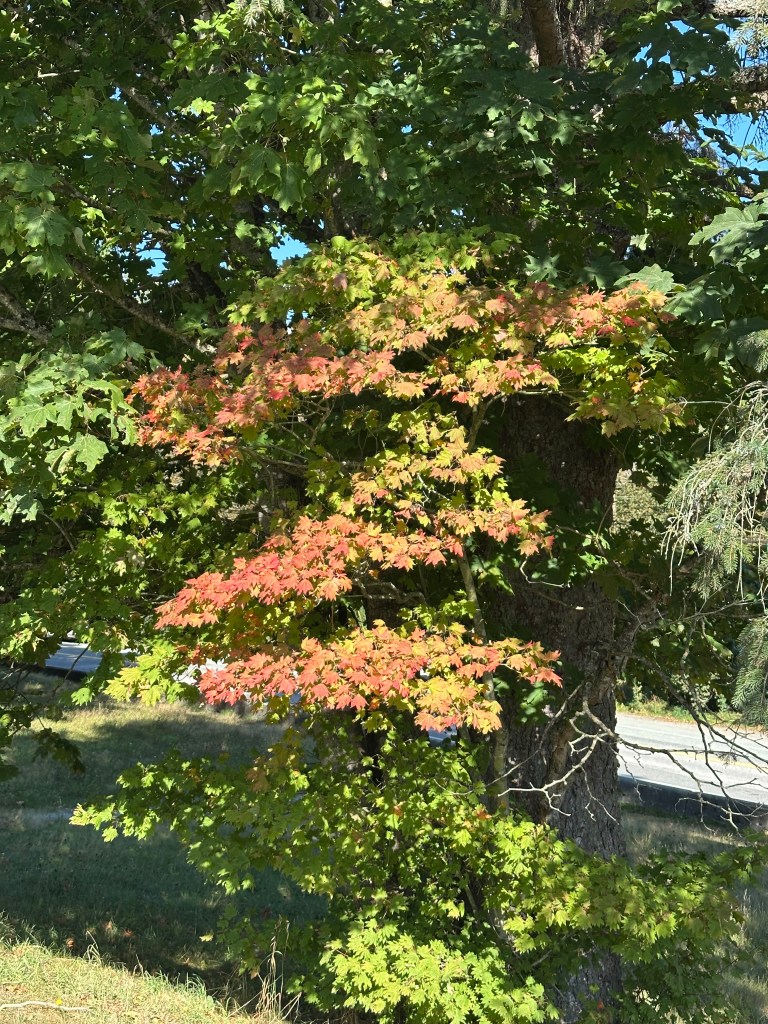
So what is happening now?
For autumn, our homepage will feature a live foliage tracker. It will list local trees and indicate whether each is currently at its peak color.
Summer Foliage – Why does it happen?
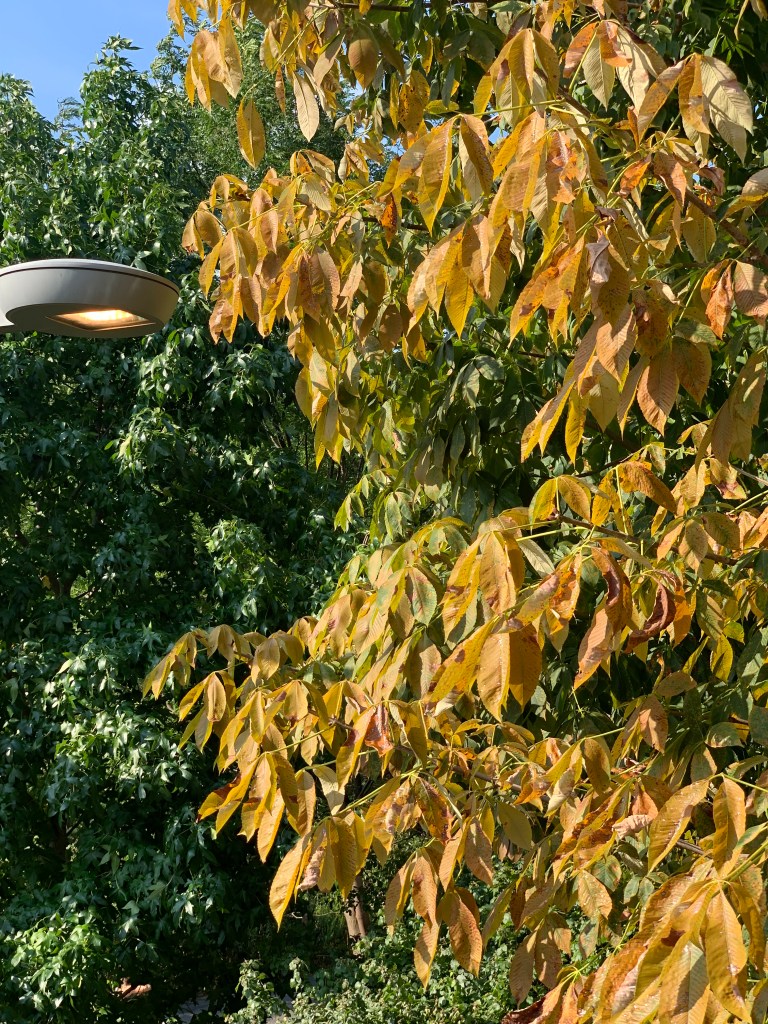
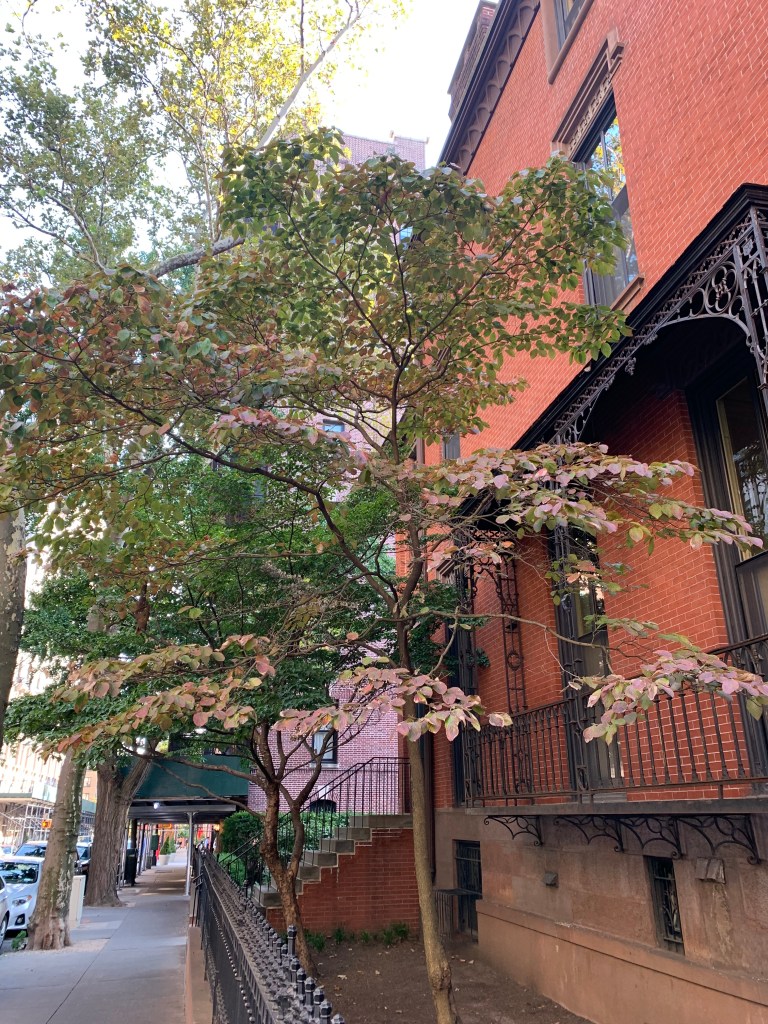
When a tree loses its leaves in the summer, it’s not a healthy seasonal process—it’s a sign of a tree in distress. This phenomenon, known as drought stress, occurs when the tree is losing water through its leaves faster than its roots can absorb it from dry soil.To survive, the tree’s critical response is to shed its leaves, thereby cutting off its primary point of water loss. This extreme measure is the plant’s last resort to conserve its limited water supply and protect its core.
With a changing climate, these periods of extreme heat and drought are becoming more frequent and severe. This means trees are enduring prolonged summer stress, leaving them more susceptible to disease and pests. If you see a tree shedding its leaves in the summer, it’s a clear sign that it’s under strain and could use some extra care.Here are some pictures of trees that are under summer foliage:
Here are some pictures of trees that are under summer foliage:




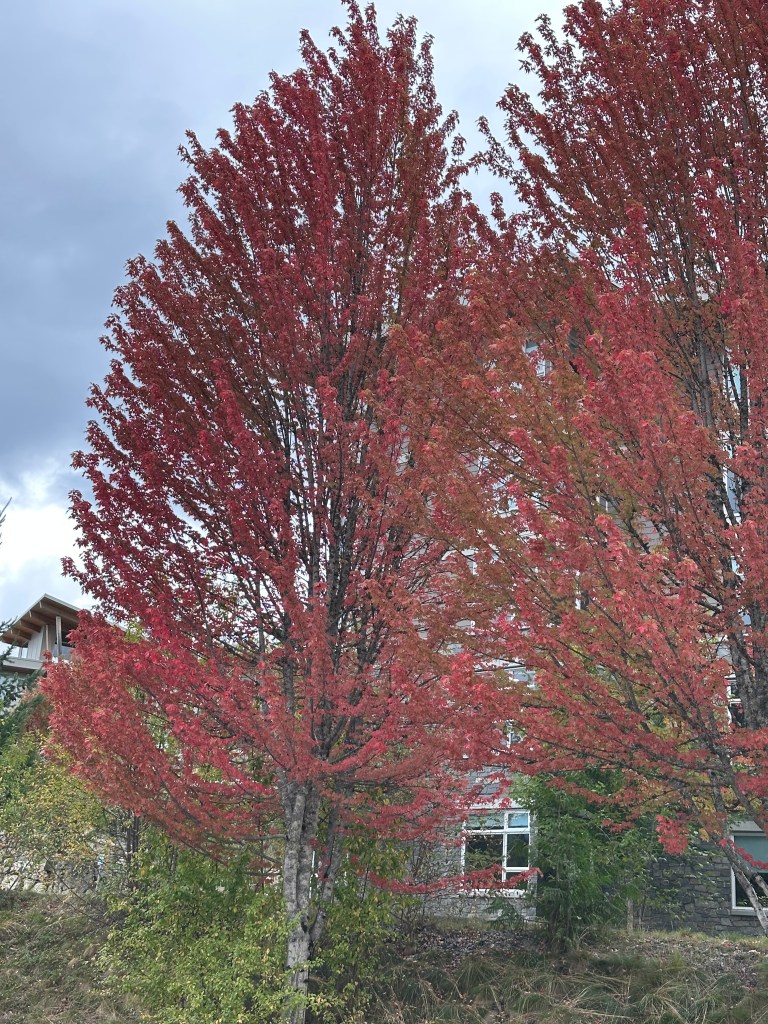
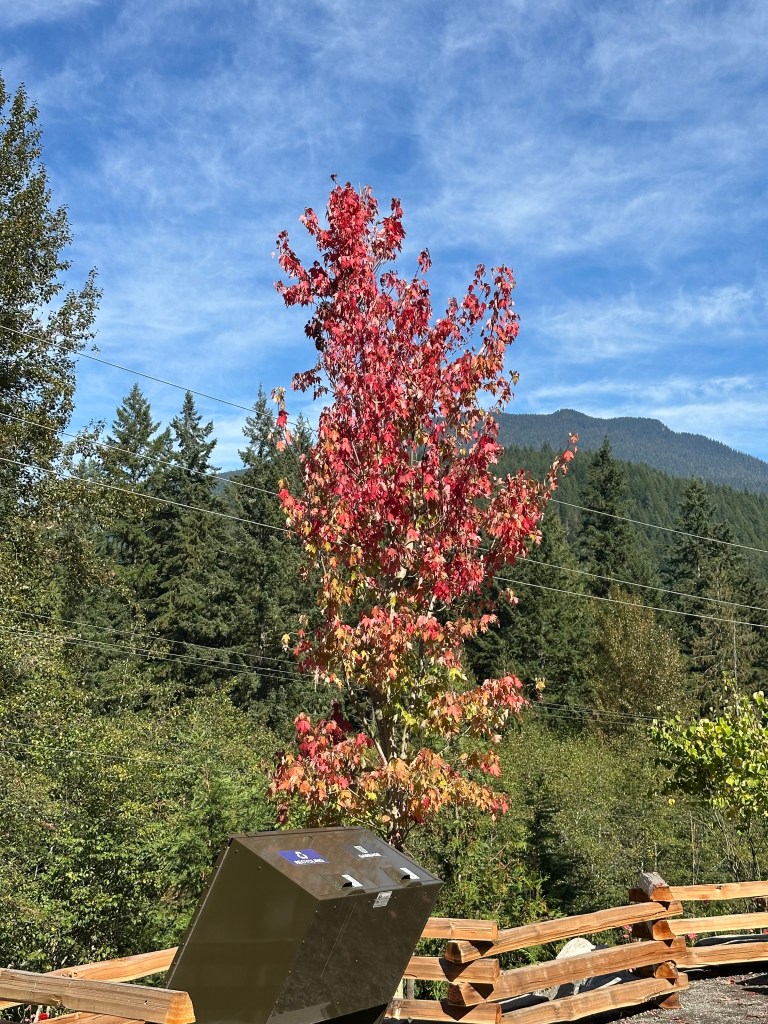
On the other hand, we’ve spotted some early fall colors in a few trees right here in Squamish:
The Conditions for Best Fall Colors
As days shorten and temperatures drop, a chemical reaction begins inside the leaves. While the timing of fall is predictable, the vibrancy of the show is not. The quality of the season’s display depends entirely on a few key factors, and understanding them is your guide to finding the most spectacular colors.
What Makes Fall Colors Pop?
Several factors are at play when it comes to the colors of fall foliage.
Soil Chemistry: The pH of the soil can also influence the colors. For example, leaves in acidic soil tend to produce red and purple hues, while those in alkaline soil promote yellows and oranges.
Sunlight: This is the most crucial factor. Leaves need sunlight to produce chlorophyll, the green pigment. As daylight hours shrink, chlorophyll production slows down, causing the green to fade and reveal the hidden yellows, oranges, and reds.
Temperature: The best colors appear after a combination of warm, sunny days and cool, crisp nights (but not freezing temperatures). The warm days allow for continued sugar production, while the cool nights trap those sugars in the leaves, promoting the creation of vibrant red and purple pigments.
Moisture: A season with adequate rainfall followed by a dry, sunny fall will result in the brightest colors. A severe drought, however, can cause leaves to wilt and drop prematurely, resulting in a muted or browned display.



Don’t miss the latest updates, and subscribe now:
Visit our Instagram and watch our stories to get more live updates
 Vancouver Season Watch