November 08, 2025

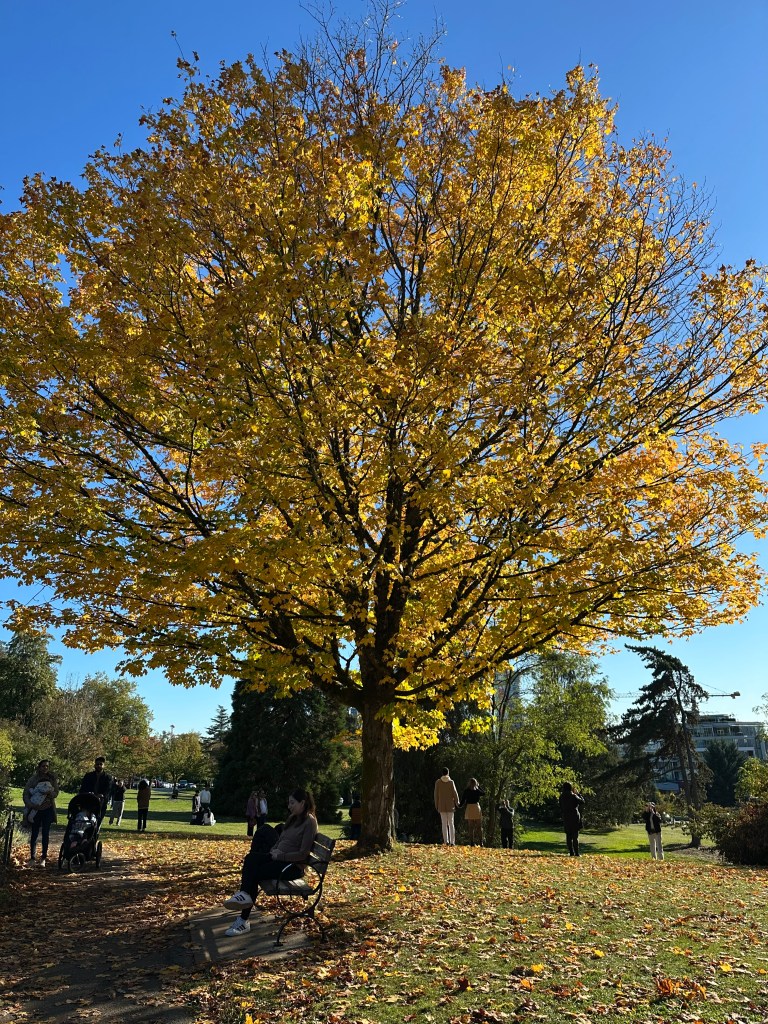
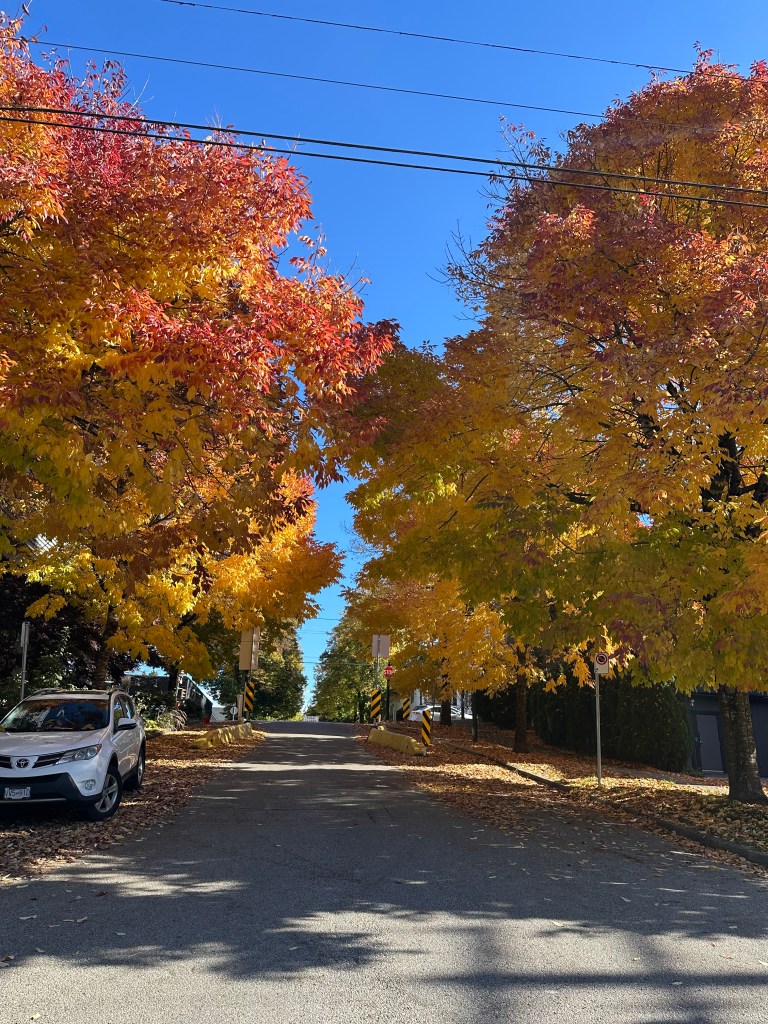
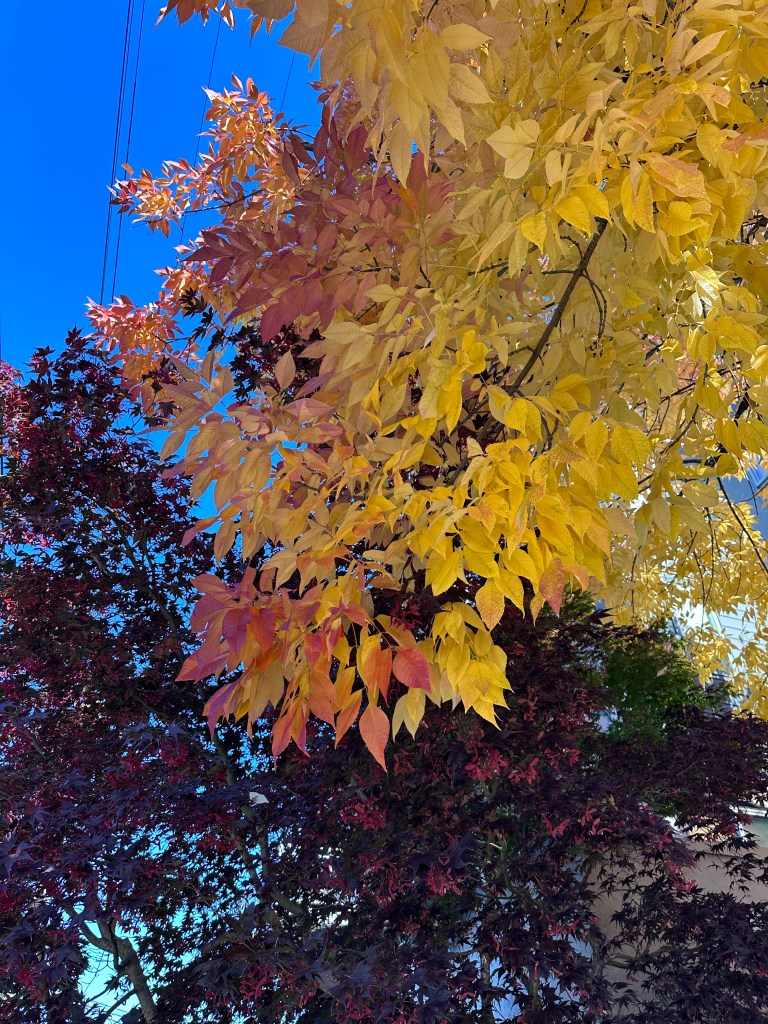
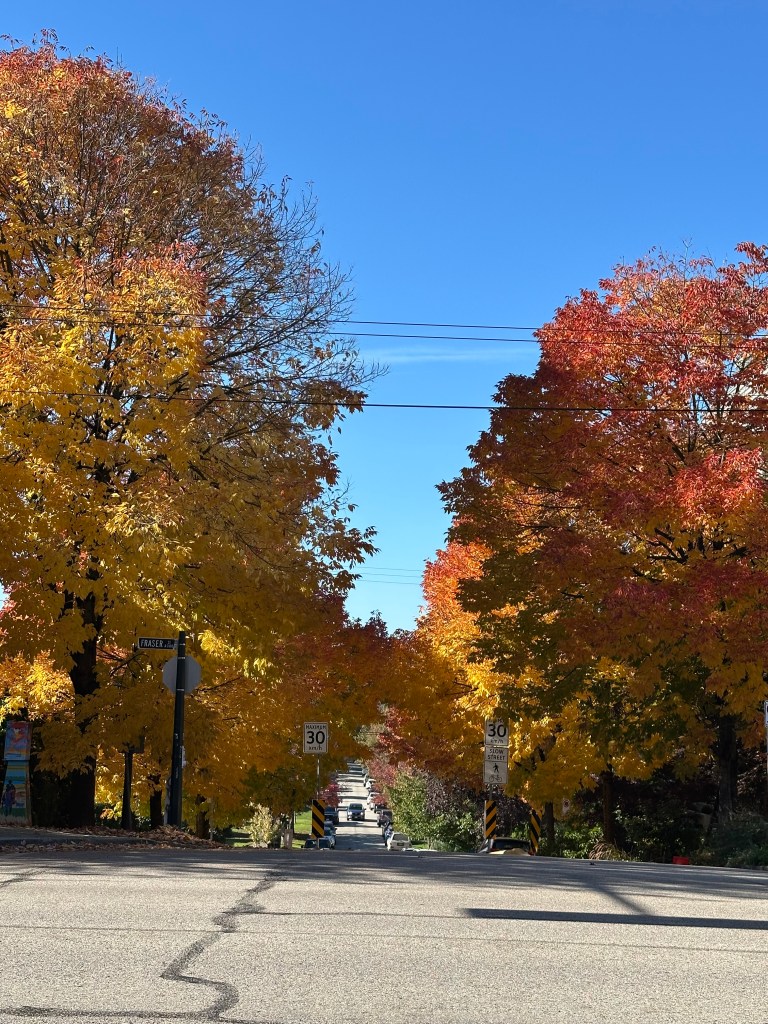
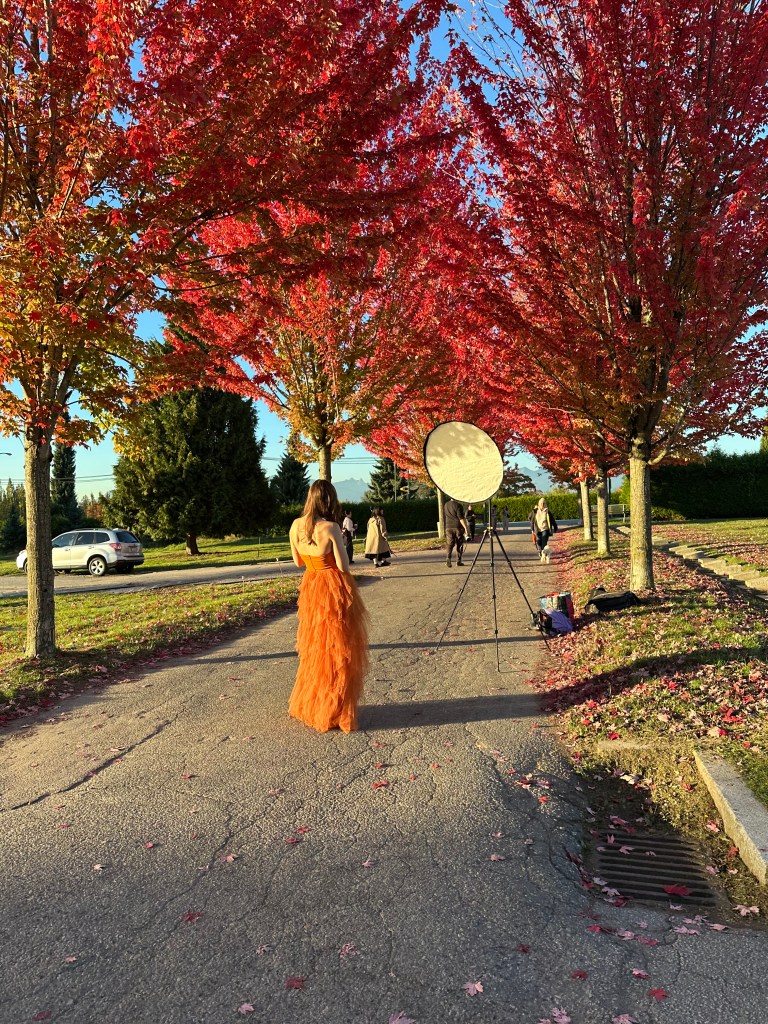
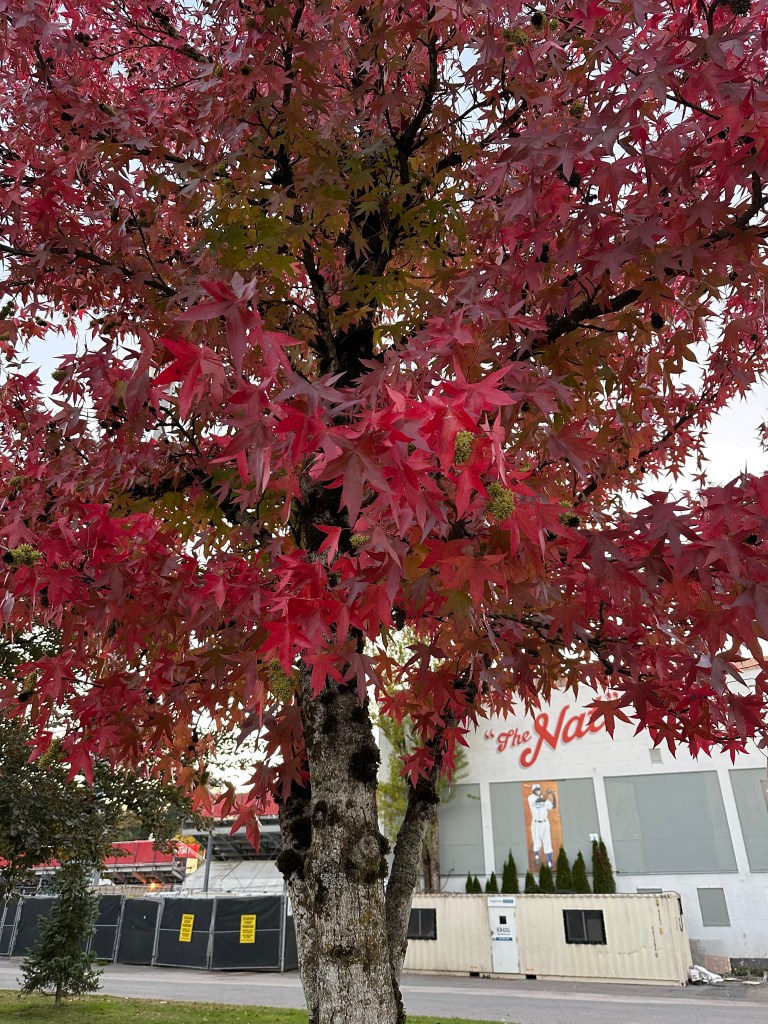
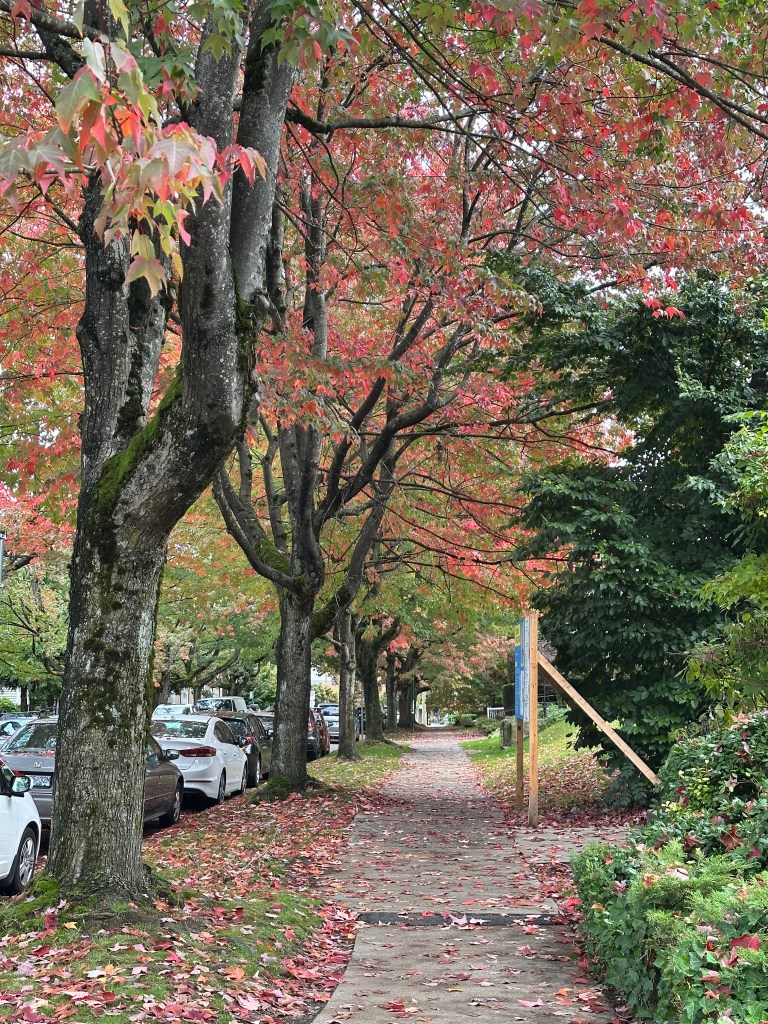
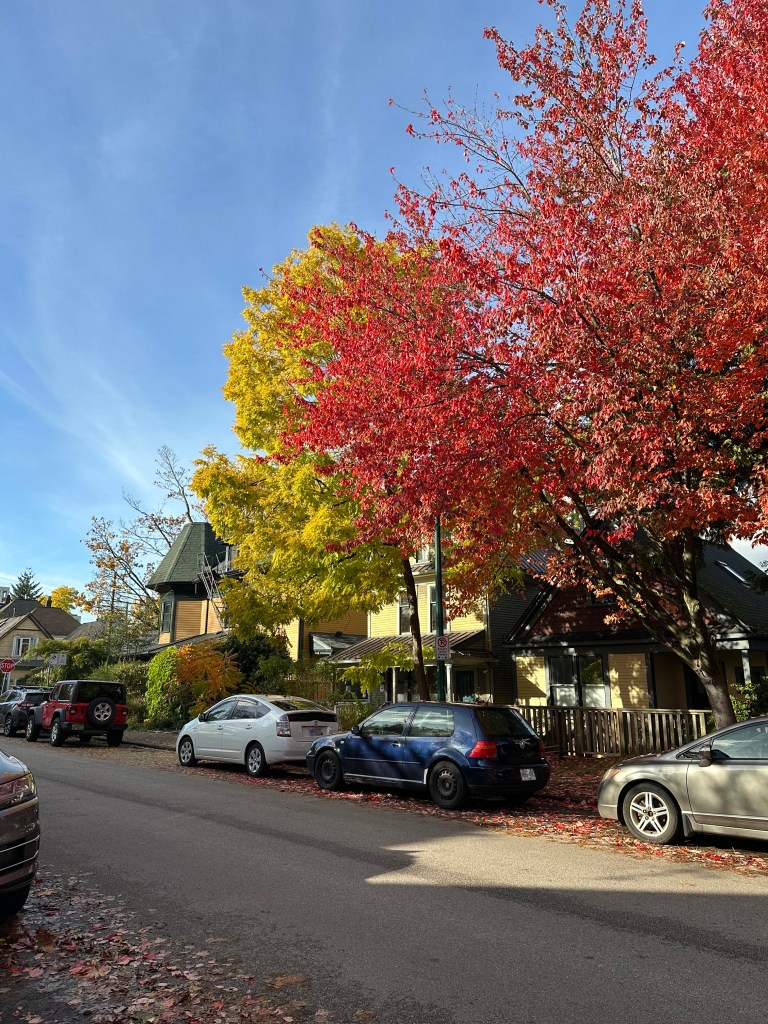
The crisp, cold snap has officially arrived. After a milder October, the past two weeks have seen temperatures drop, bringing that true autumn chill to Vancouver. But with the cold comes a spectacular reward: the fall foliage has finally hit its absolute peak across the city. From the golden maples in Stanley Park to the fiery reds in Queen Elizabeth Park, the trees are a blaze of color. If you’ve been waiting for the perfect moment, this is it. With a long stretch of rain in the forecast for next week, this weekend is very likely the last chance to get out and enjoy this brilliant display before the leaves are washed away.

Foliage Stage in Vancouver

At Peak (Go see these now!) The city is currently painted with the vibrant hues of our late-season performers. This is the absolute best weekend to see:

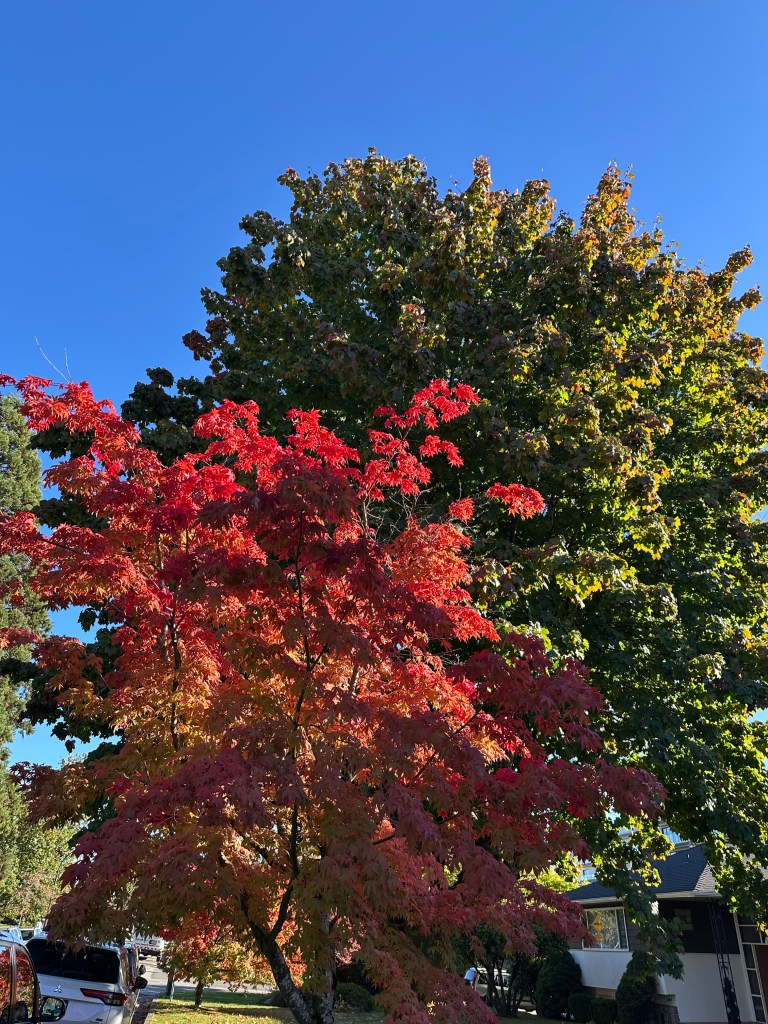
  • Japanese Maples: Brilliant, deep reds are everywhere right now.
  • Sweetgum (Liquidambar): putting on their spectacular multi-colored display.
  • Sugar Maples & Vine Maples: deeply saturated and at their best.
  • Cherry Trees: often overlooked in autumn, they are currently showing wonderful oranges and bronzes.
  • Big Leaf Maple: It’s a mix—while some have dropped, many are still holding massive golden canopies at their peak.

Winding Down (Past Peak but still visible) While mostly finished, you can still find bright spots if you look closely:

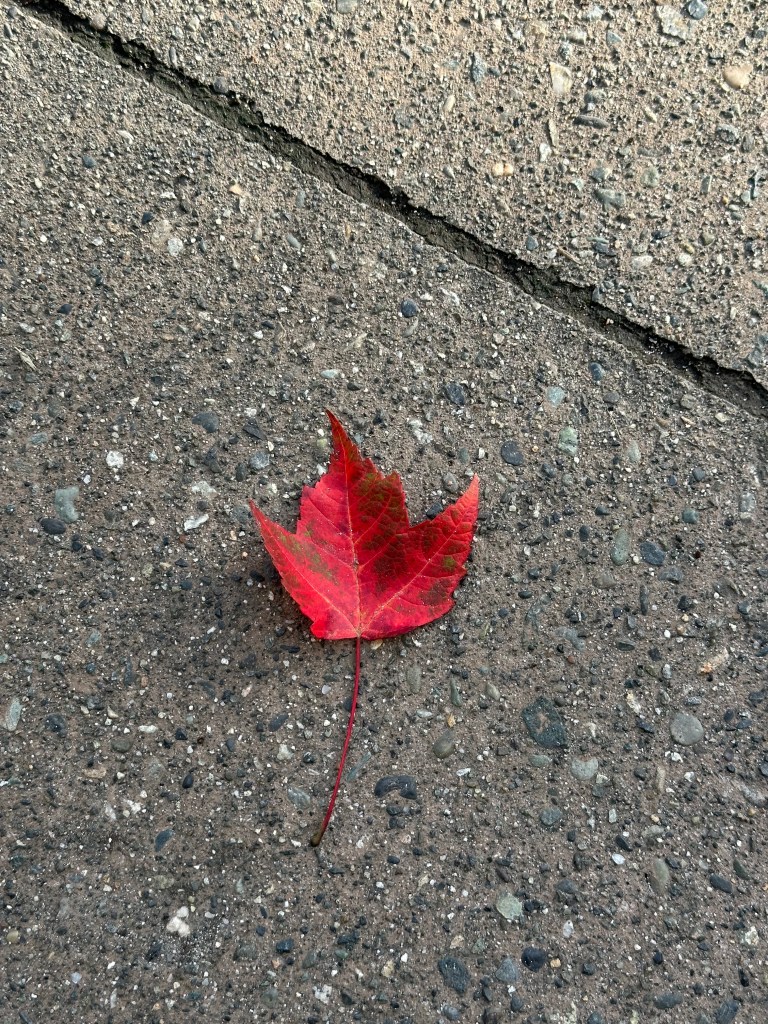
  • Red Maples: mostly bare, but lucky finders can still spot a few holding onto brilliant red.
  • Honey Locust: dropping fast, but some bright yellow remains.
  • Katsura: mostly past, though you might catch a whiff of burnt sugar from a few late turners.

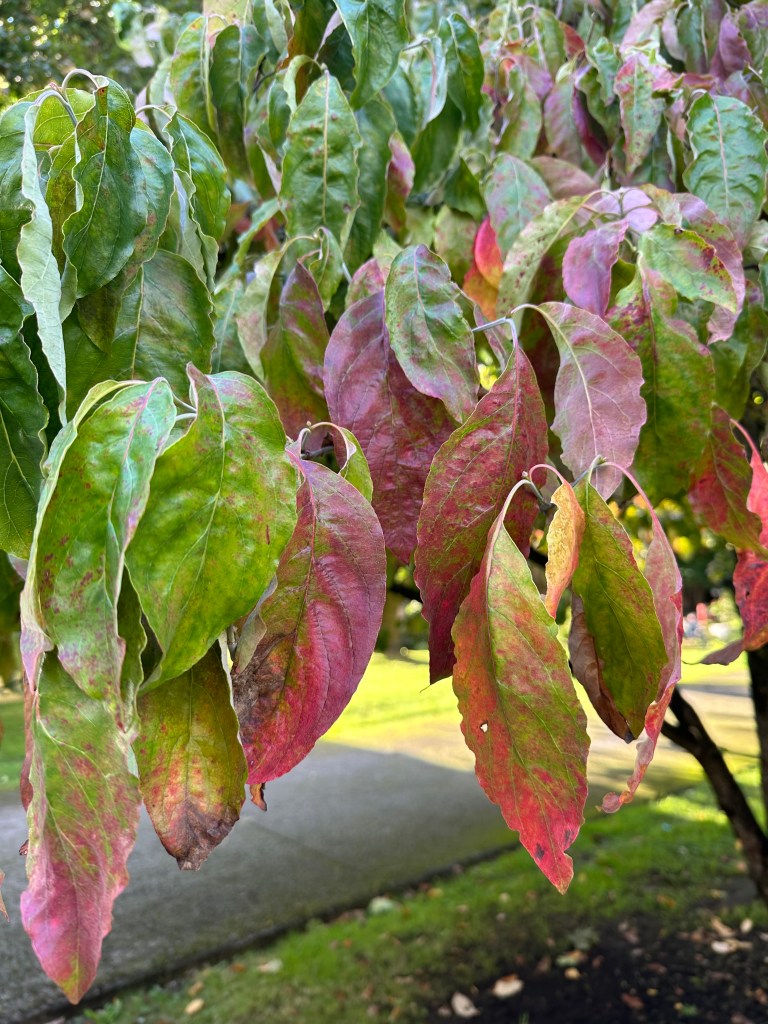
Finished for the Season We have officially said goodbye to the Ash treesand Dogwoods until next spring.

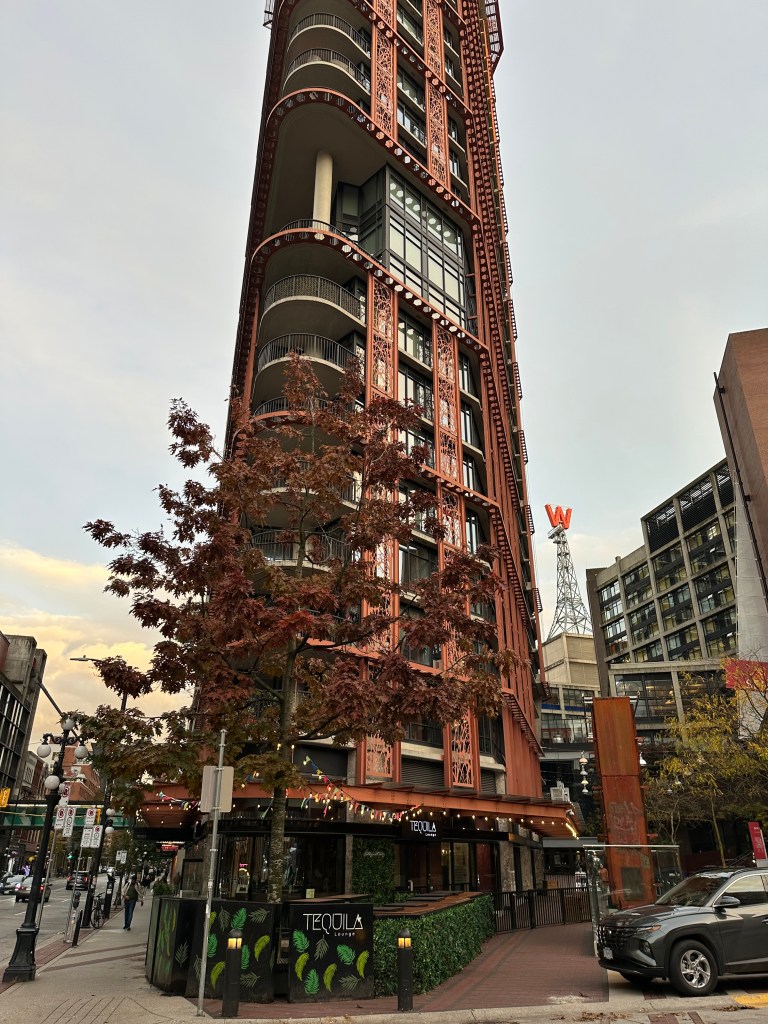
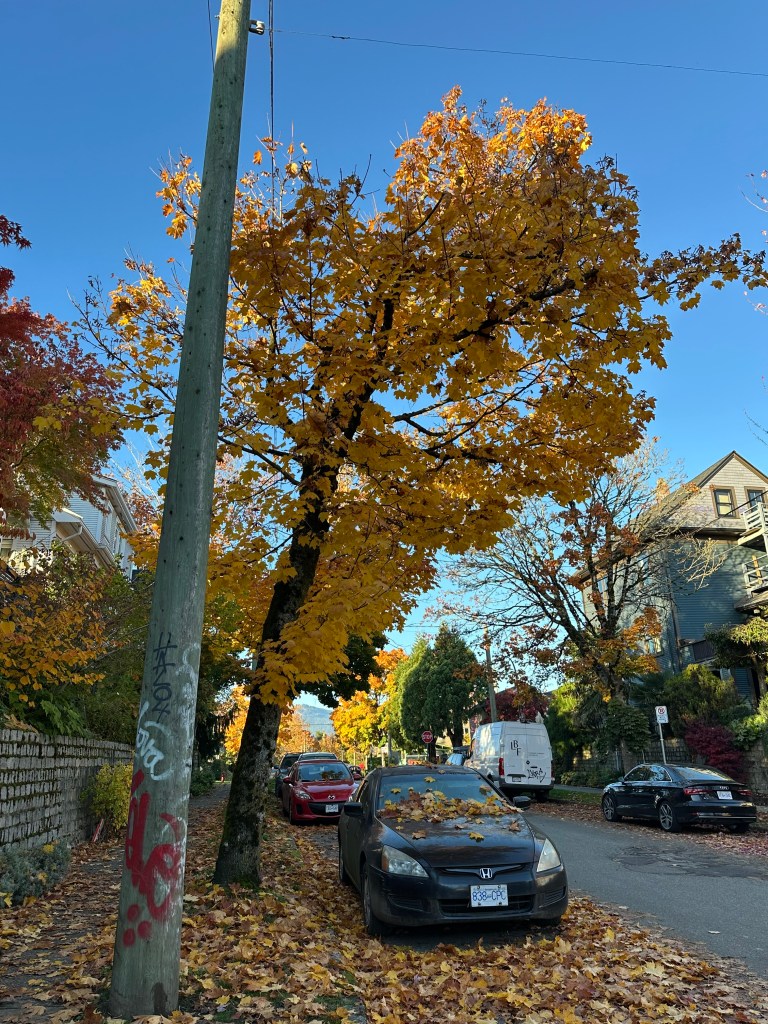
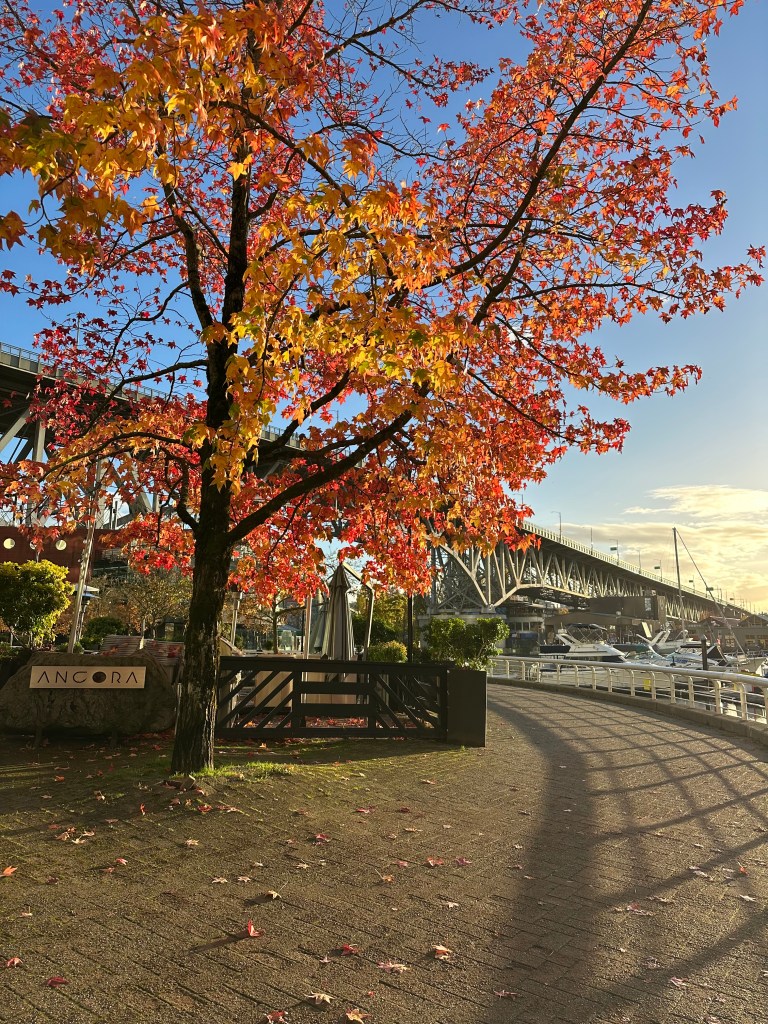
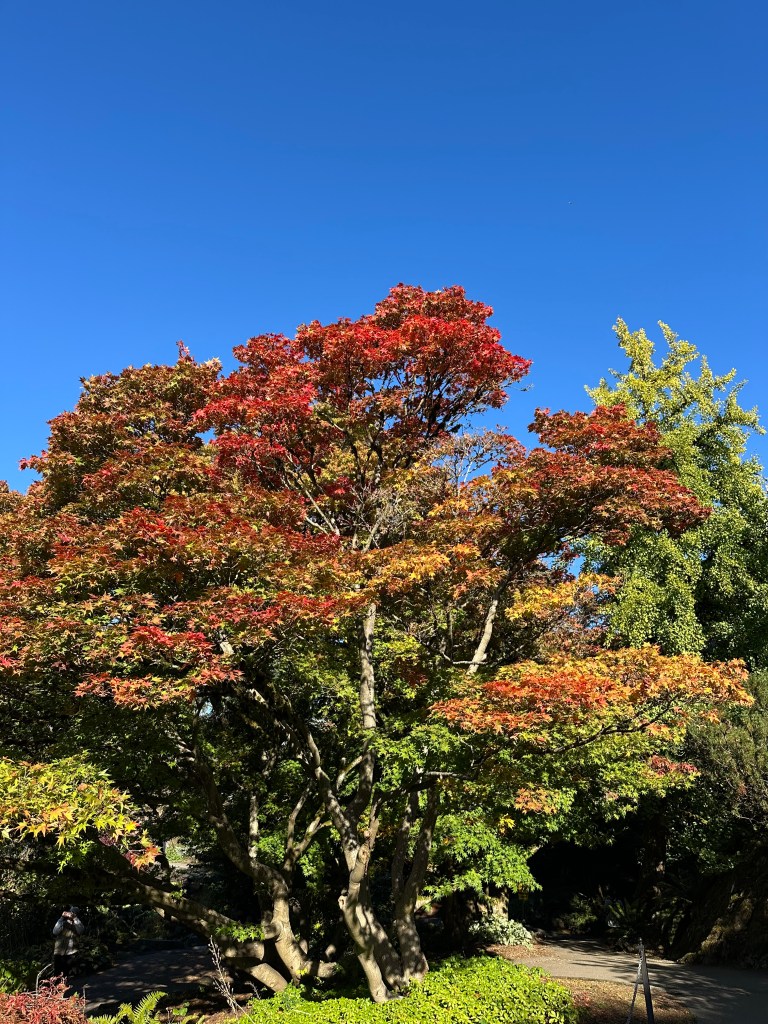
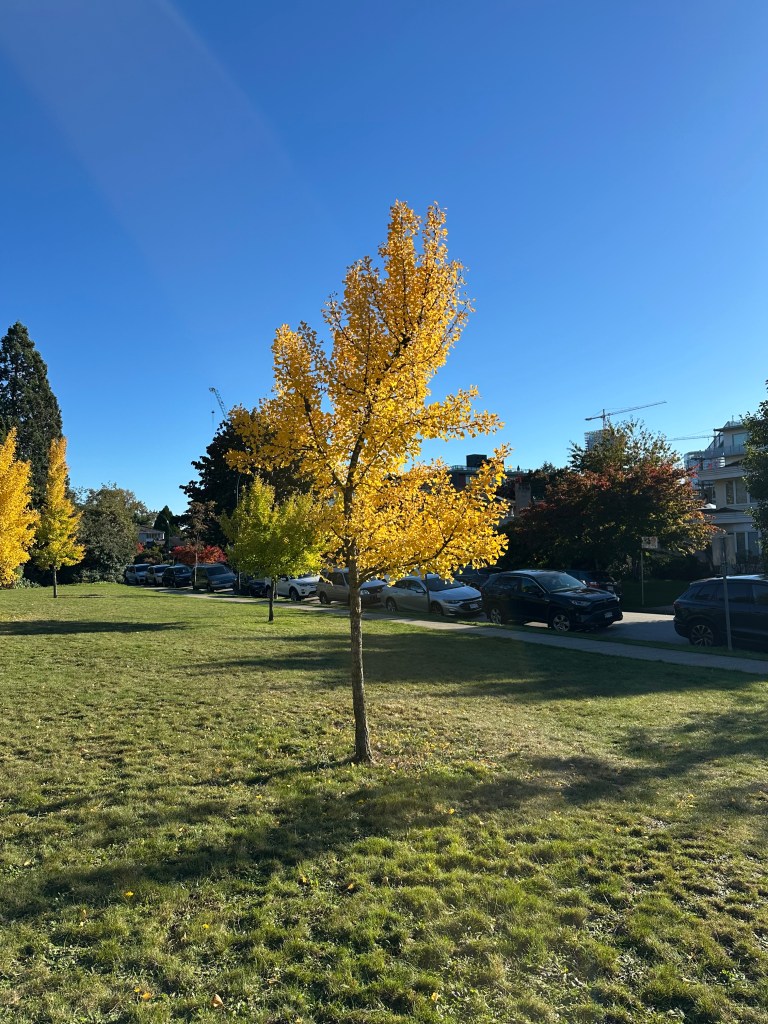
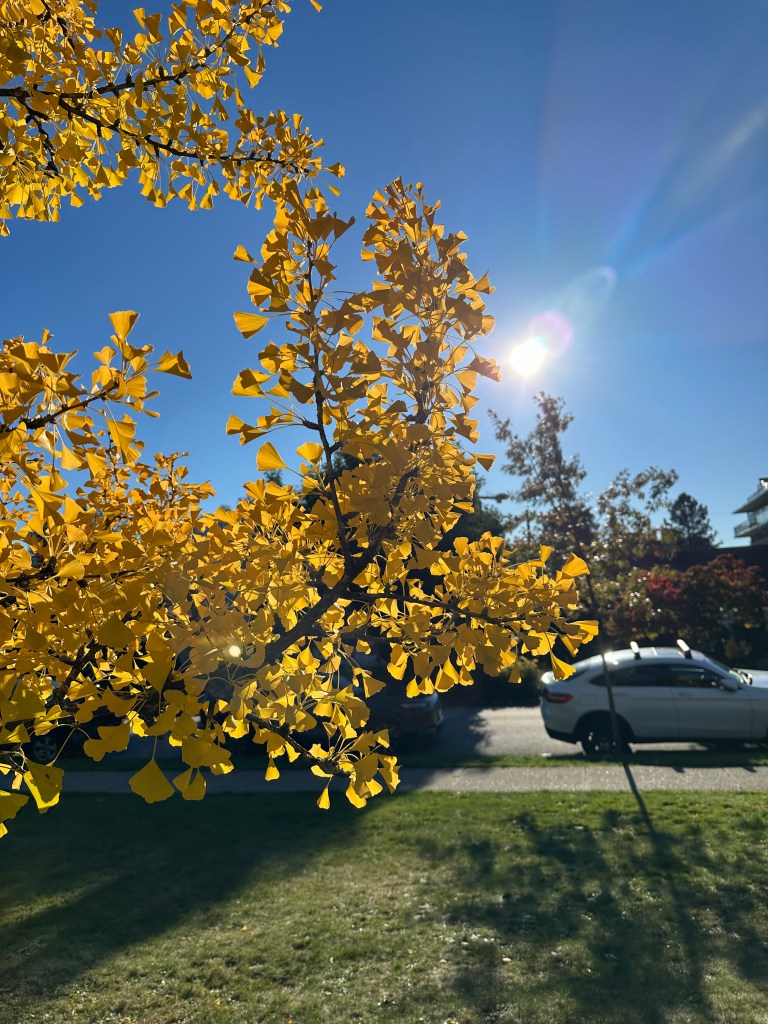
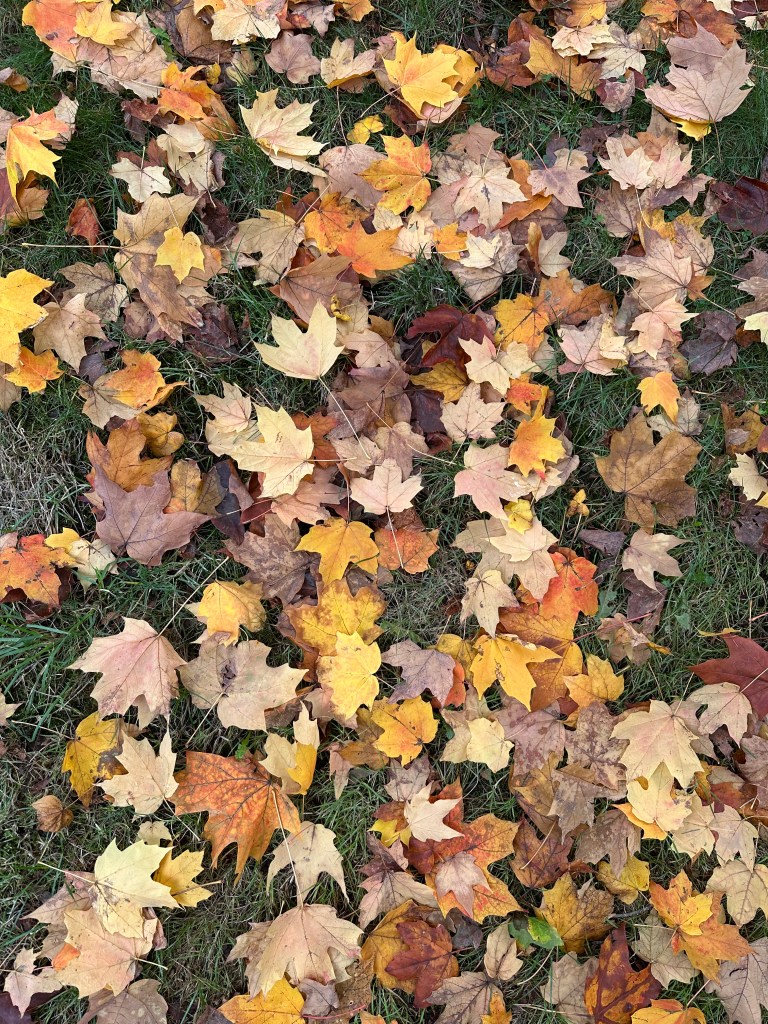
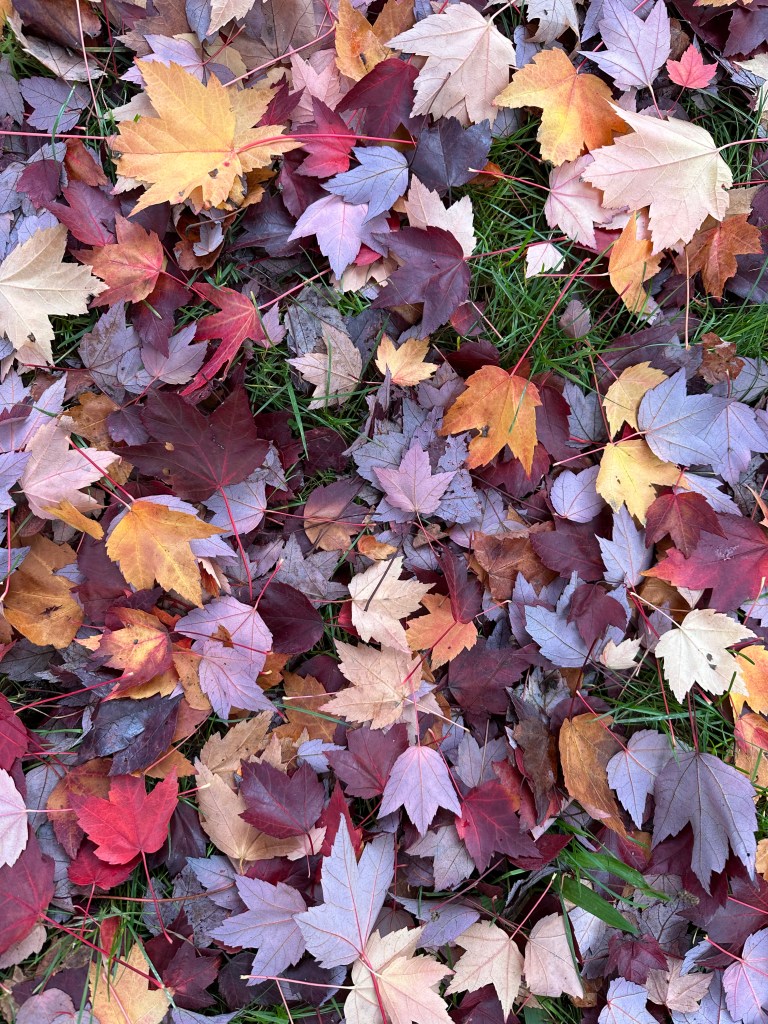
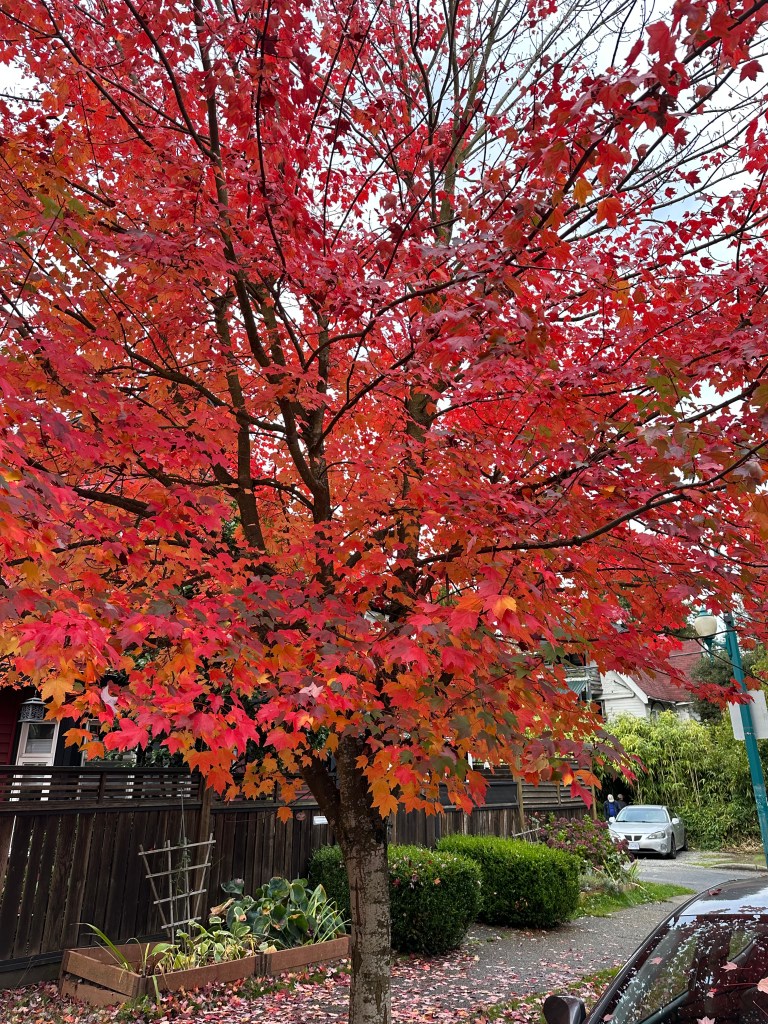
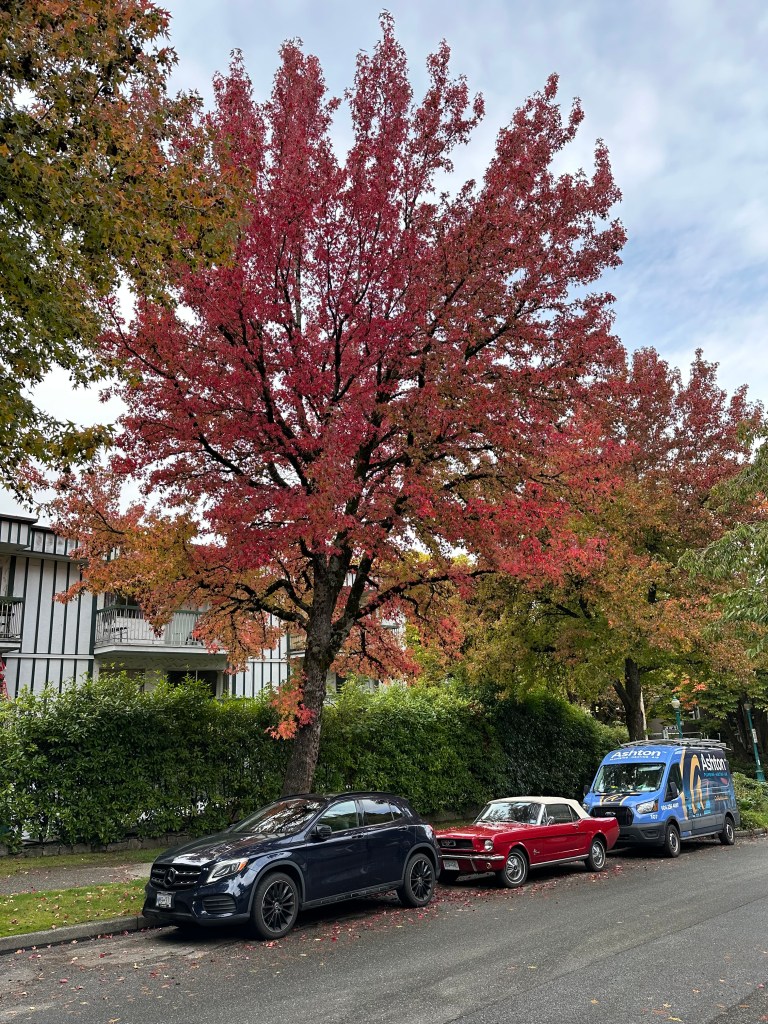
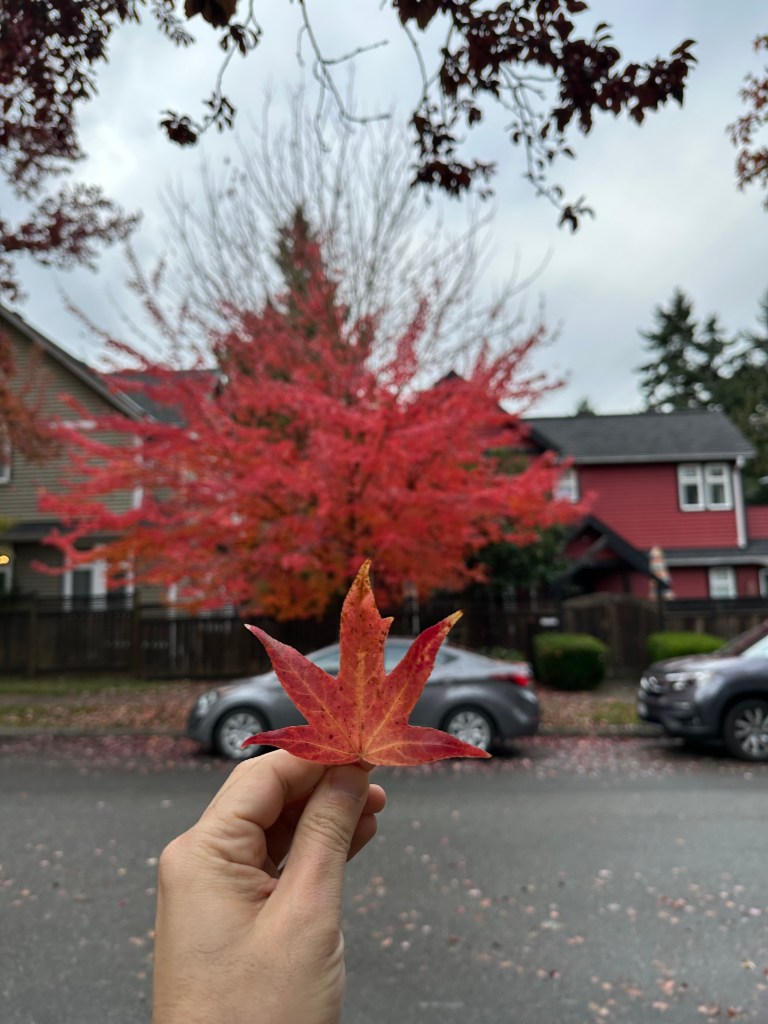
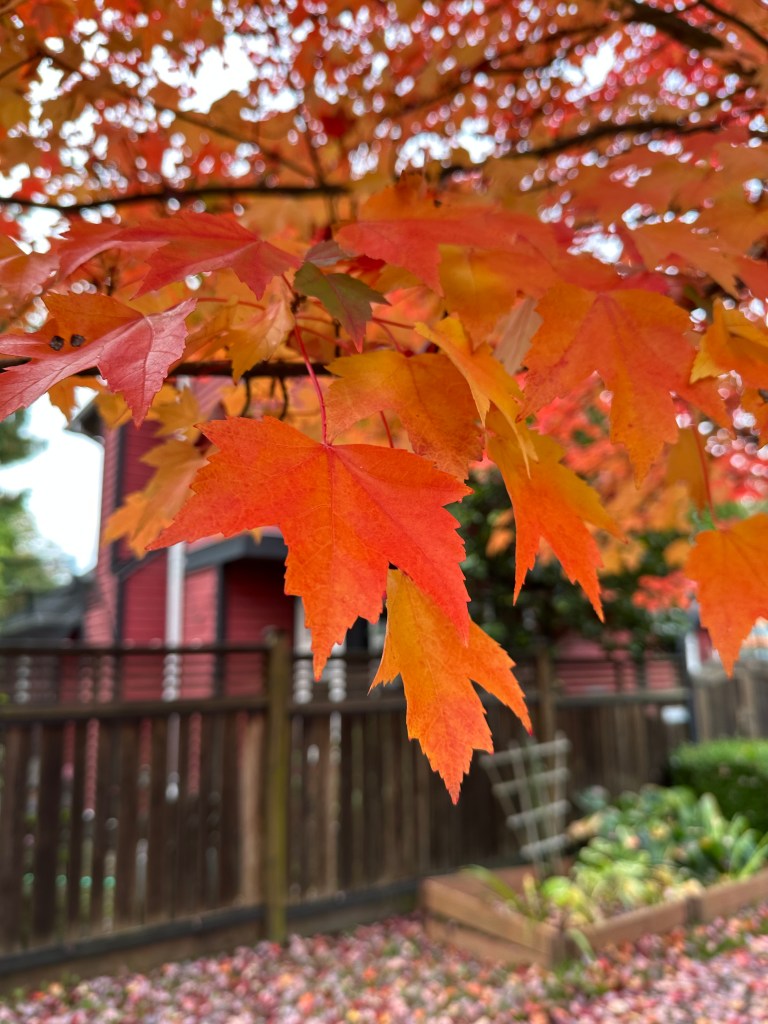
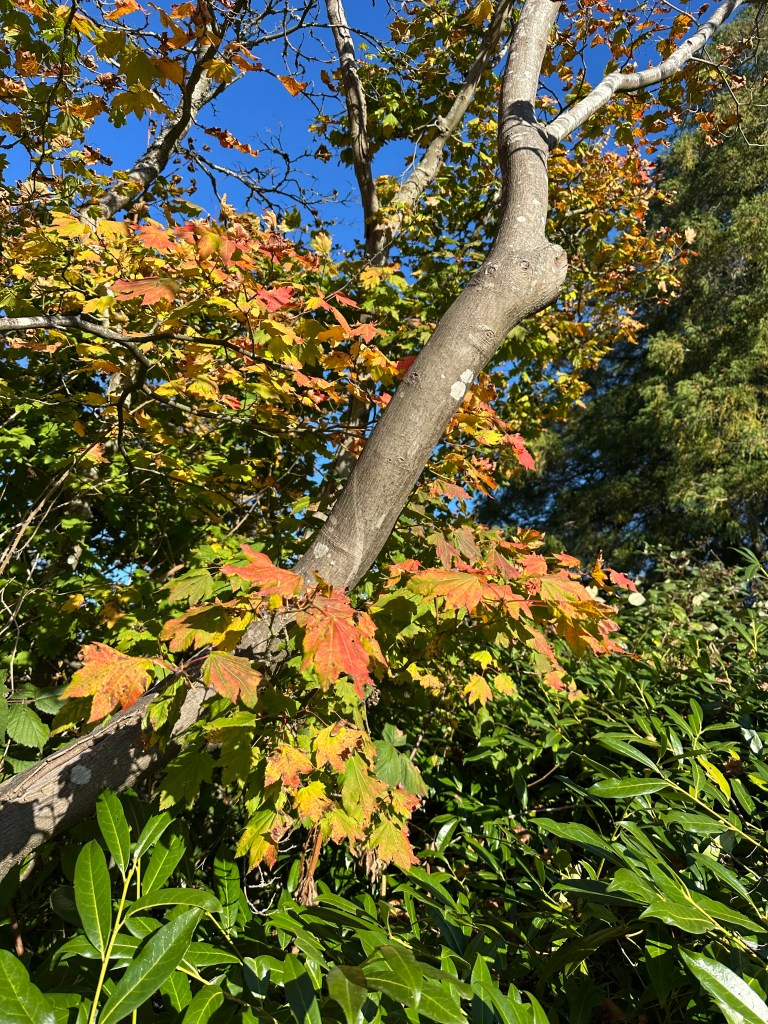
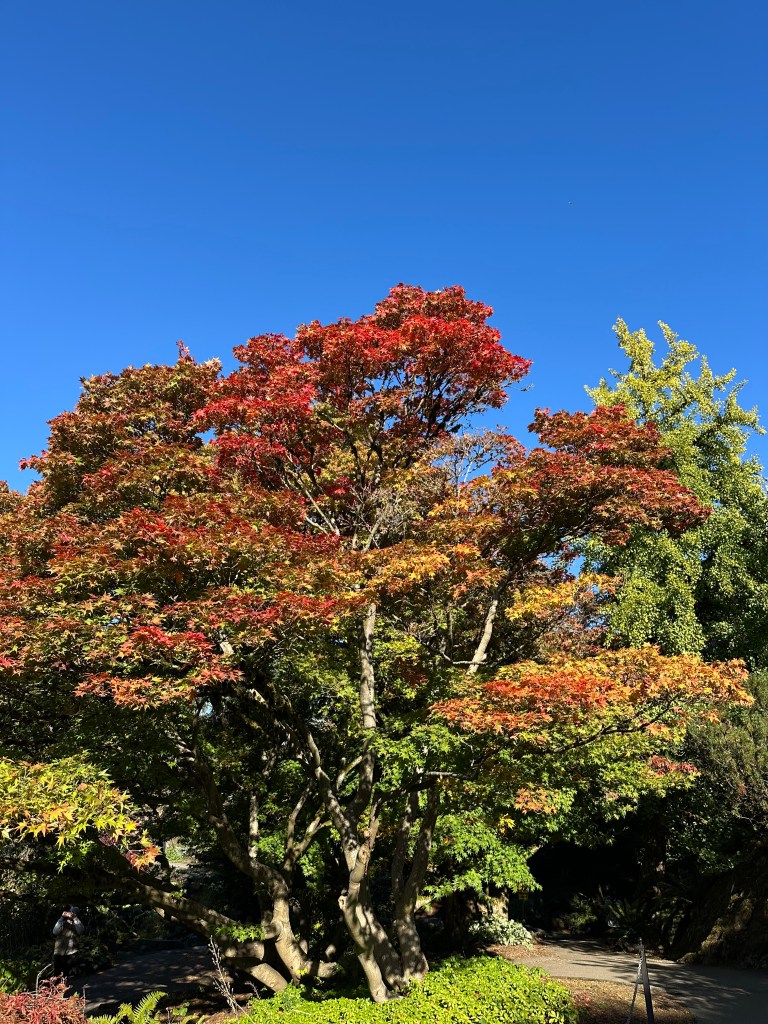
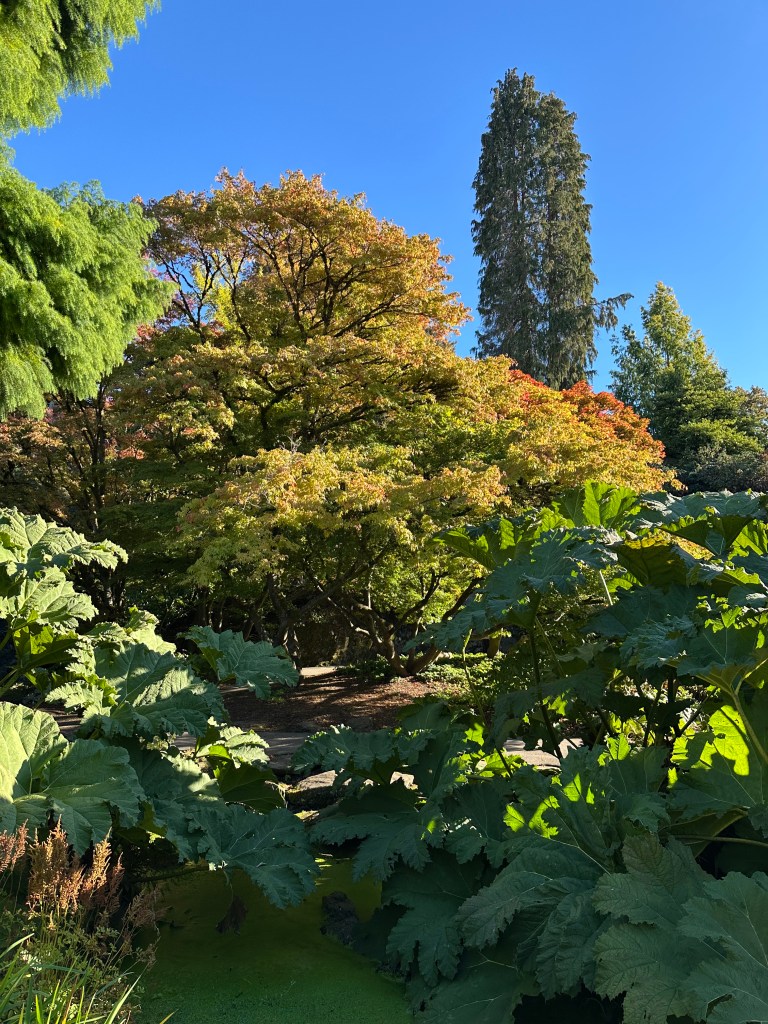
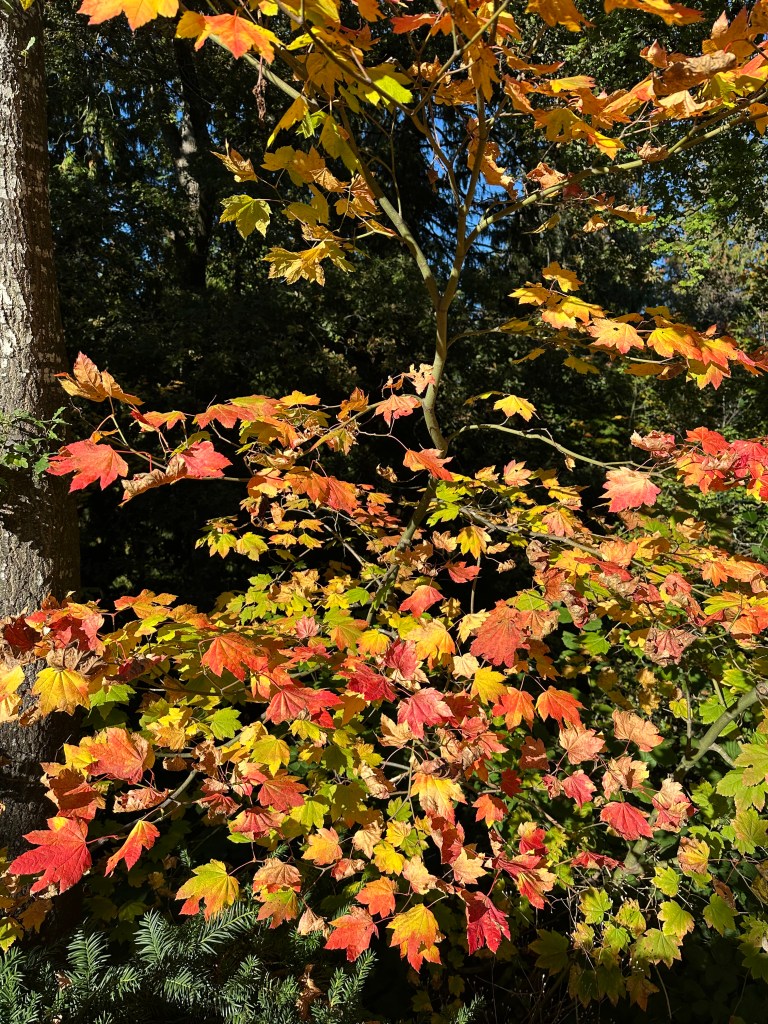
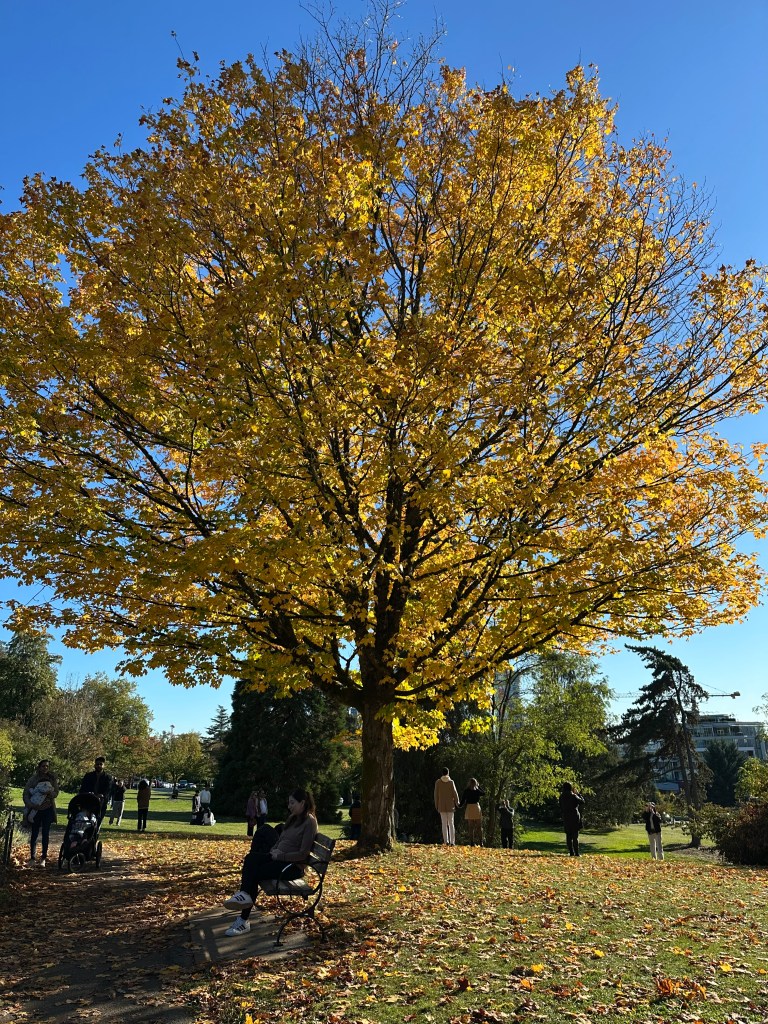
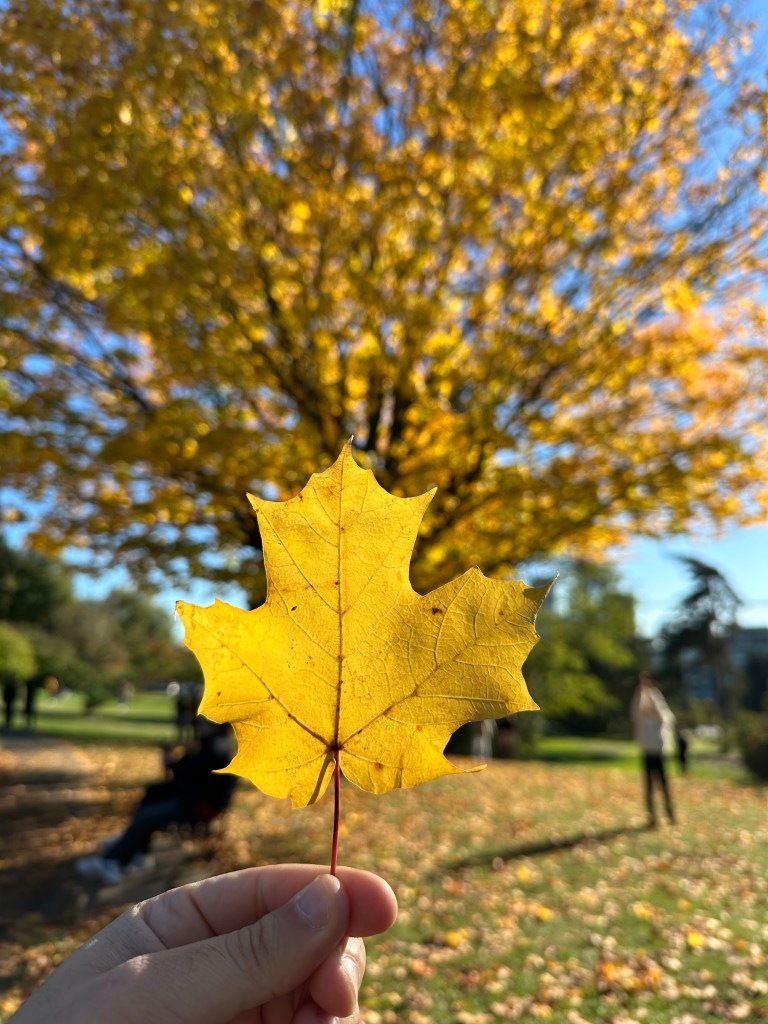
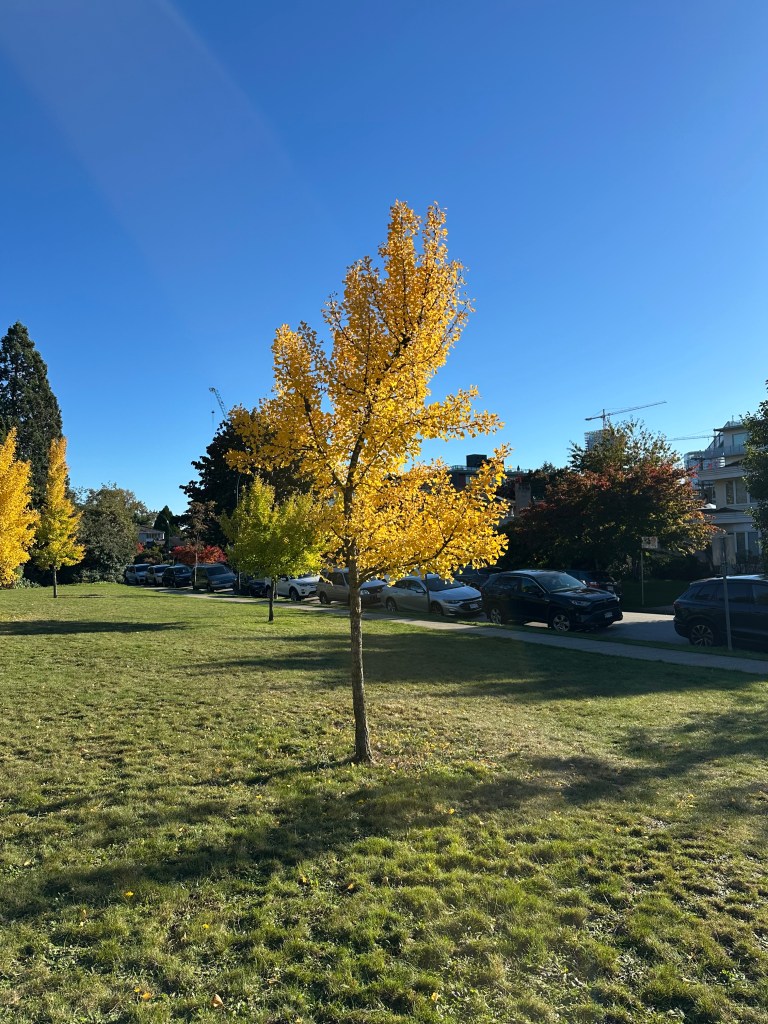
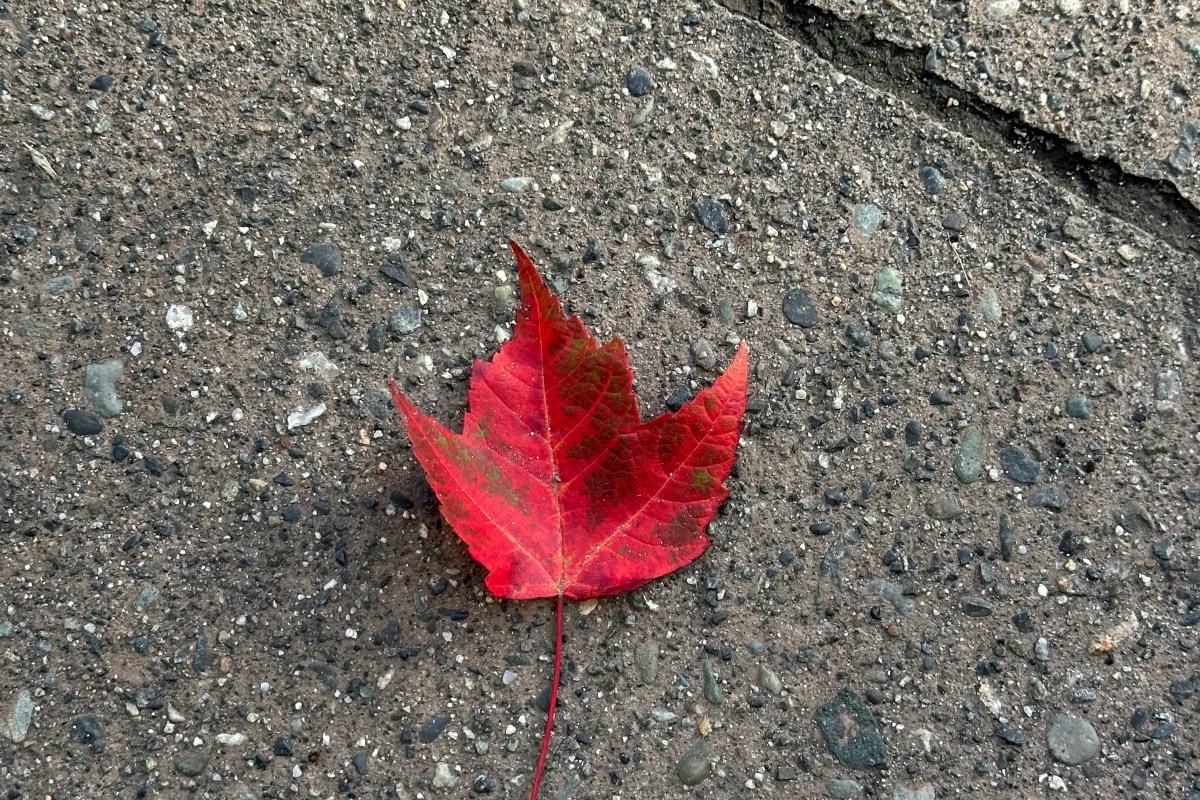
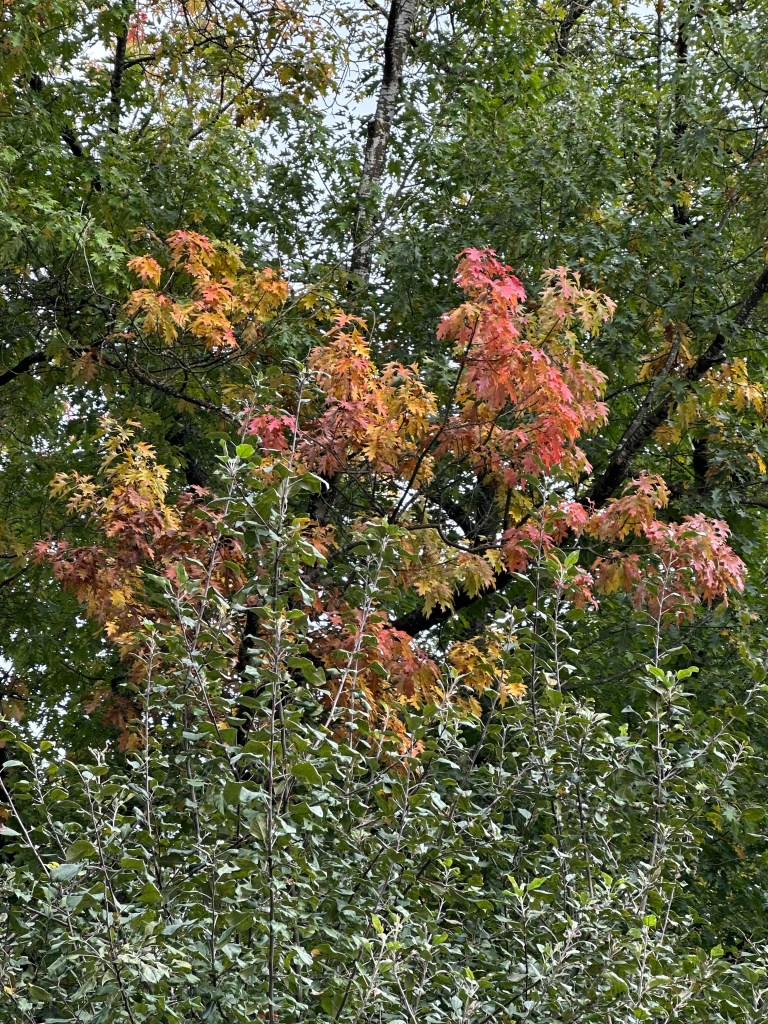
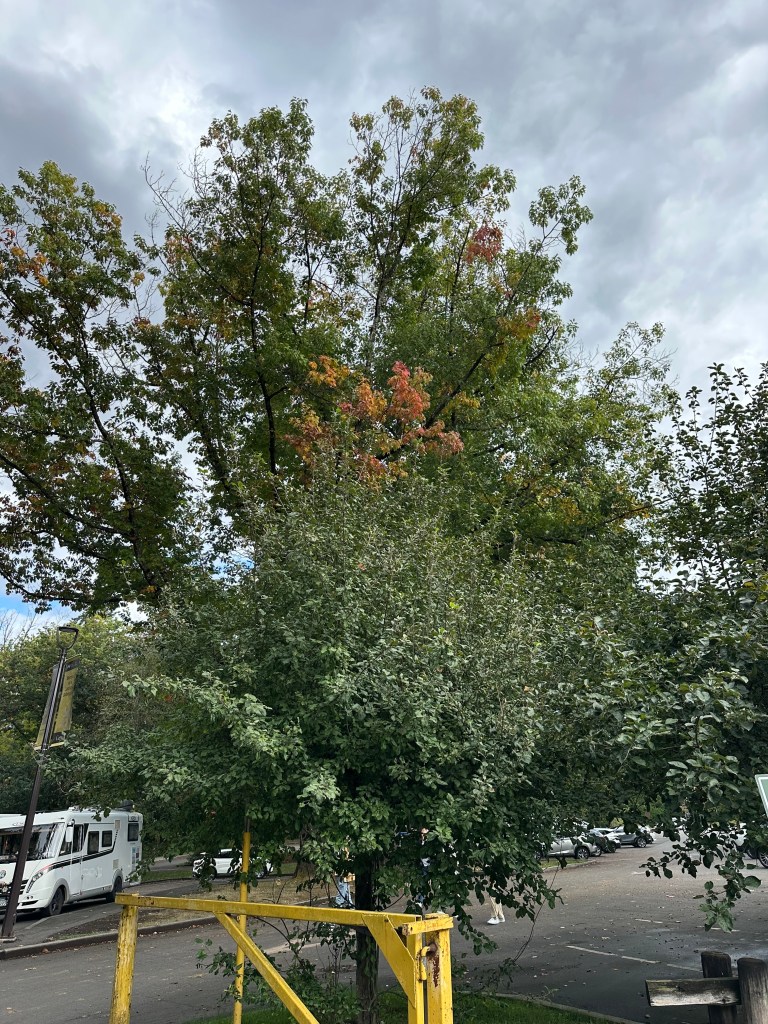
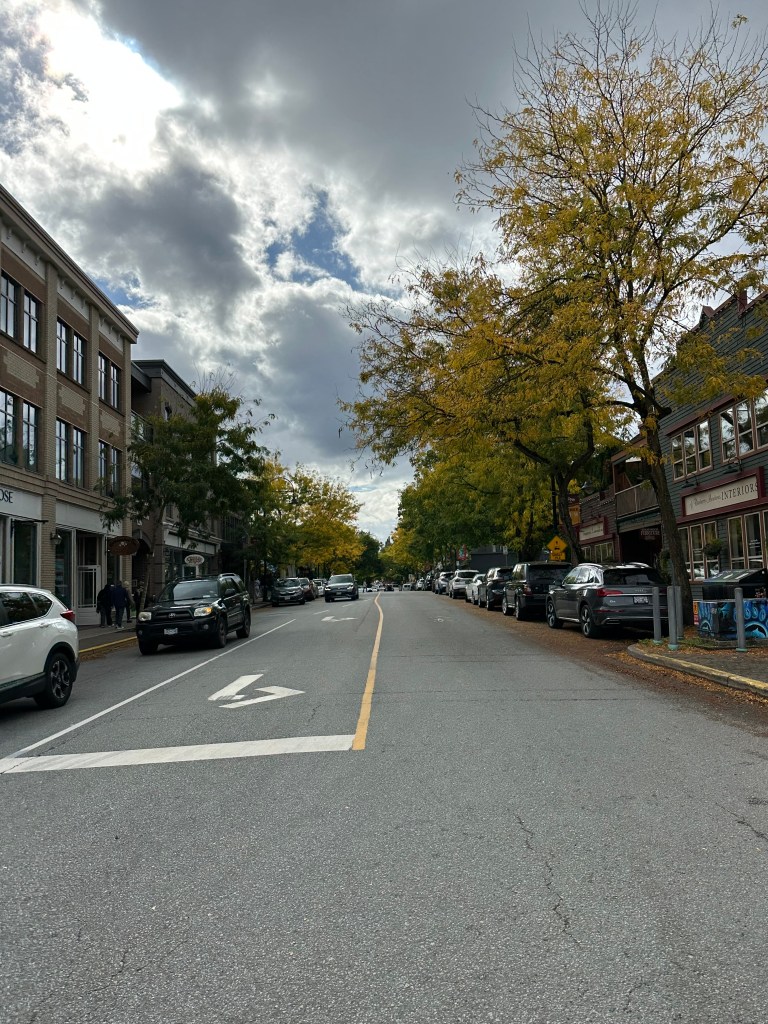
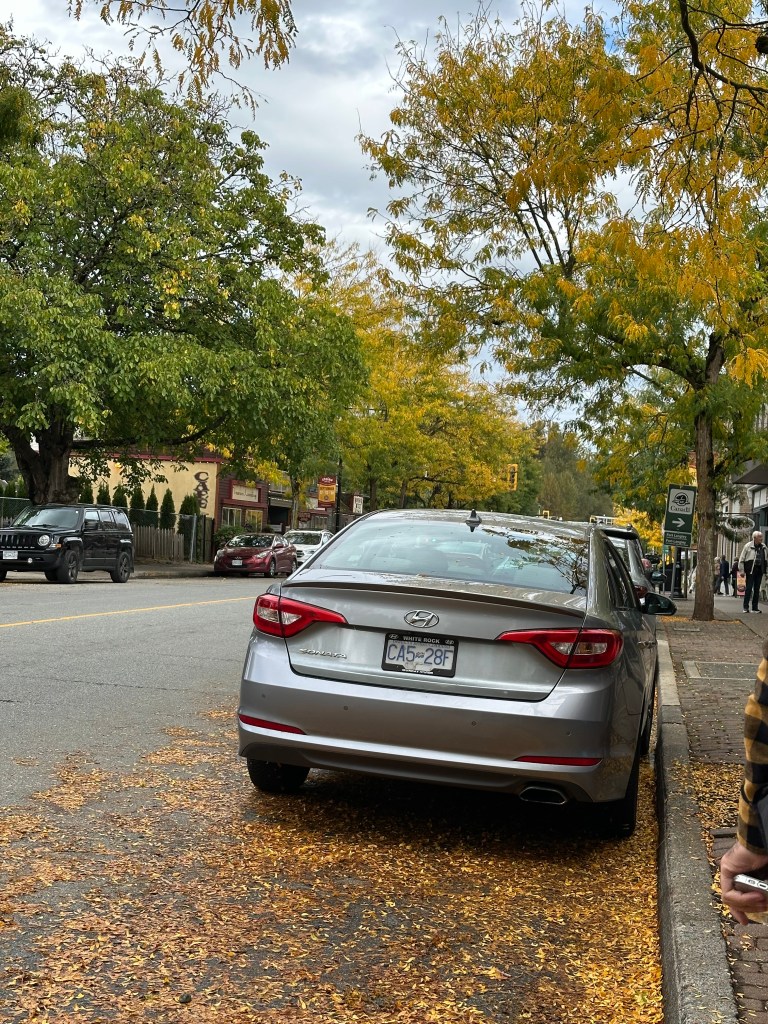
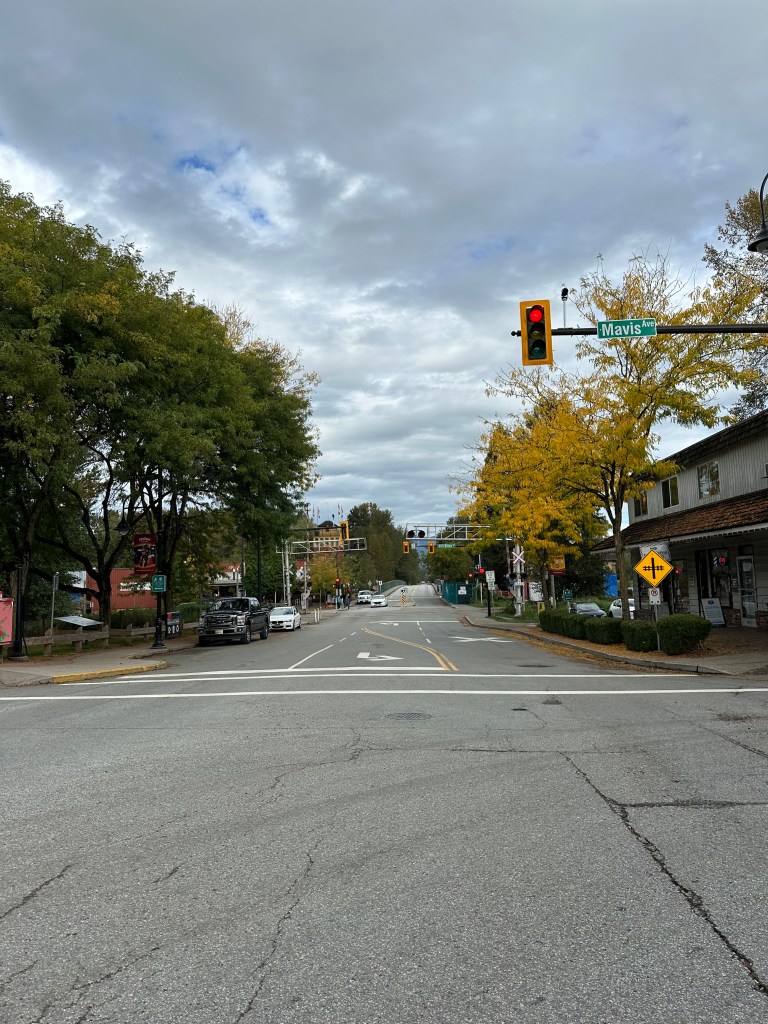
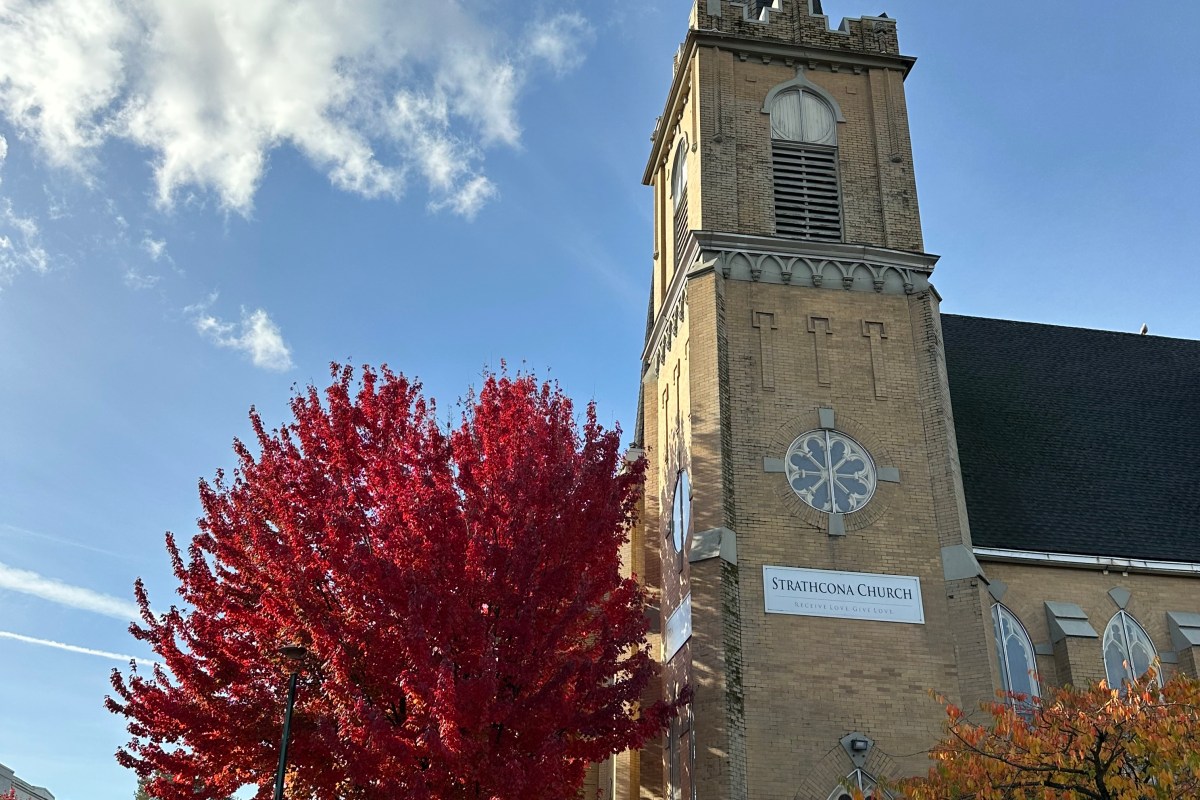
Here are some pictures I took at in different locations around the city:
Where to See the Peak Foliage (Beyond the Big Parks)

While Queen Elizabeth Park and VanDusen are always reliable, for those looking for a more neighbourhood-focused or specific spot to see our in-peak trees, here are some must-visit locations right now:

  • The West 10th Avenue Canopy: Forget the famous gardens for a moment and take a walk along West 10th Avenue between Blenheim and Alma Streets. Here, you’ll find a lush canopy of Big Leaf Maple and other towering species creating one of the city’s most impressive golden tunnels.
  • Mountain View Cemetery: The stretch of path between 33rd and 37th Avenue within the cemetery is lined with trees that turn a brilliant, fiery red—a beautiful and reflective spot to see the Dogwood and Liquidambar at their best.
  • UBC’s Main Mall and TRIUMF Loop: The wide, university boulevards have a majestic East Coast feel as the season peaks. For vivid reds and yellows, head to the areas around the Main Mall and the TRIUMF building, which are spectacularly lined with turning foliage.
  • The Arbutus Greenway (South of 41st): Perfect for a bike or walk! This popular off-street path is currently boasting some spectacular leaf displays, particularly on the section south of 41st Avenue where the tree concentration is highest.
  • The Sylvia Hotel: For a stunning photo-op of a classic Vancouver landmark, head to the Sylvia Hotel on Beach Avenue. The ivy climbing the side of the historic building transforms into a deep, vibrant scarlet that can’t be missed.
  • East Van’s Hidden Gem: Don’t overlook the side streets of East Vancouver. Take a cruise or a stroll along Cambridge Street between Nanaimo and Slocan for a fantastic, neighbourhood-scale view of golden and red leaves.

What’s Next?
This is the final call! The weather forecast is clear: a long stretch of rain is set to move in by Sunday evening and will continue all next week. This weekend really is the last clear window to see the peak foliage. That incoming rain and wind will quickly wash the most delicate leaves—especially from the maples and cherries—to the ground.

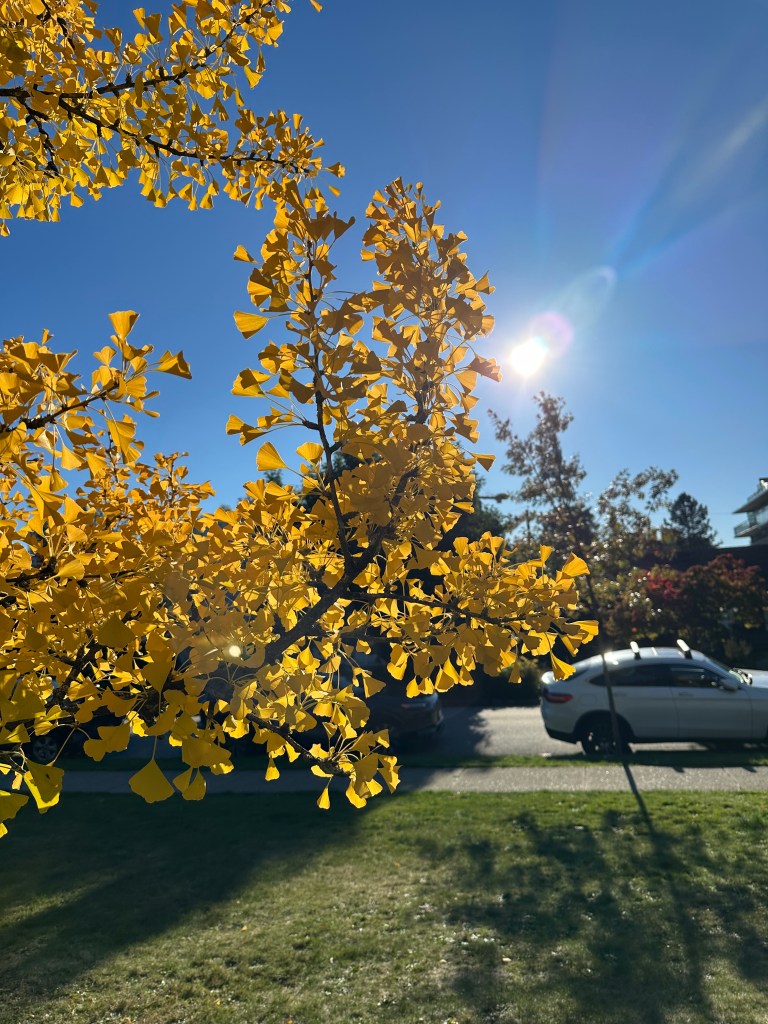
However, the season isn’t completely over. While the main show will be finished, there are always some tough late-bloomers. Keep an eye out for trees like Oaks, which are famous for stubbornly holding their leaves, and the brilliant Ginkgo trees, which often wait until everyone else is finished before they turn a stunning, uniform yellow.

Foliage in Canada

Deciding where and especially where to go and watch the foliage in peak color can be a struggle.
However, there are many sources that can help you make a better decision.

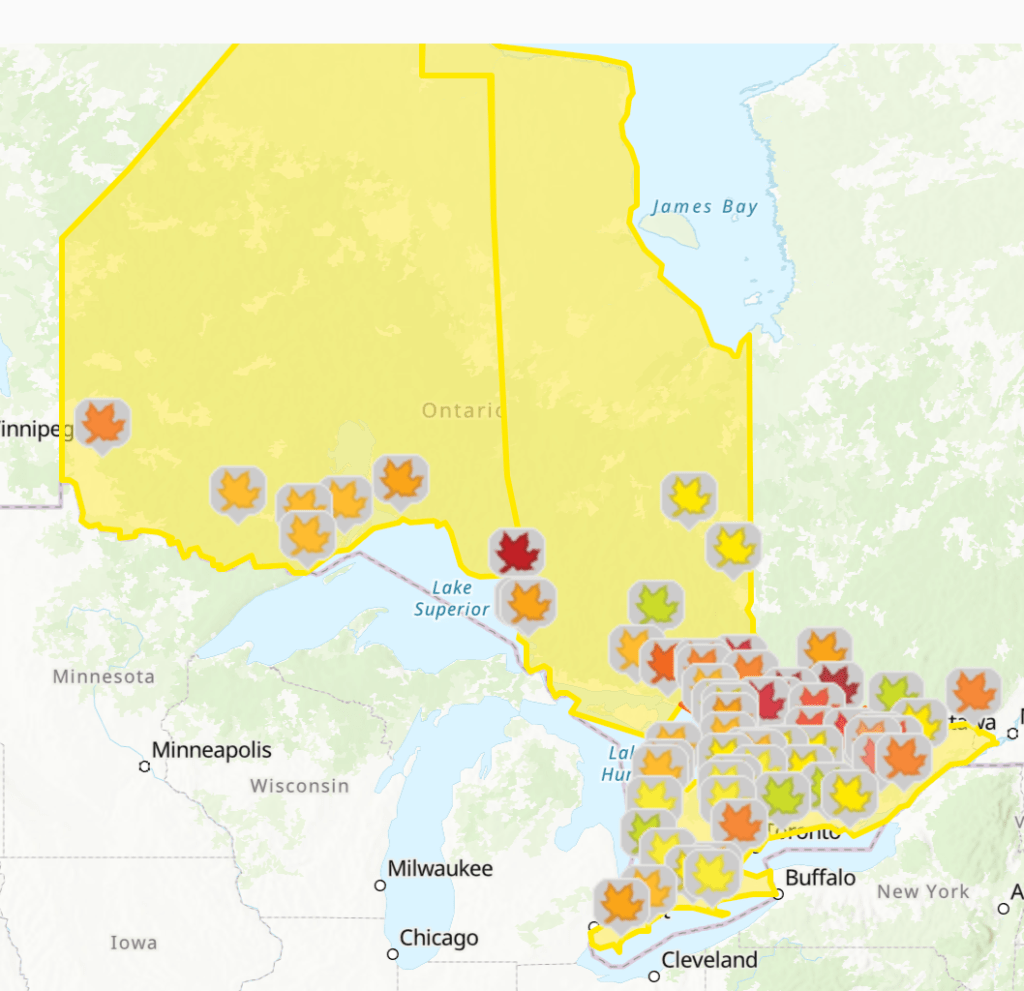
  1. Ontario Parks – This is the official Ontario Parks fall color tracker. It provides real-time reports on leaf color changes and peak viewing times across all provincial parks in Ontario. The site includes dominant colors, leaf fall percentages, and recommended viewing spots for each park. It’s a go-to resource for “leaf peepers” in the region..
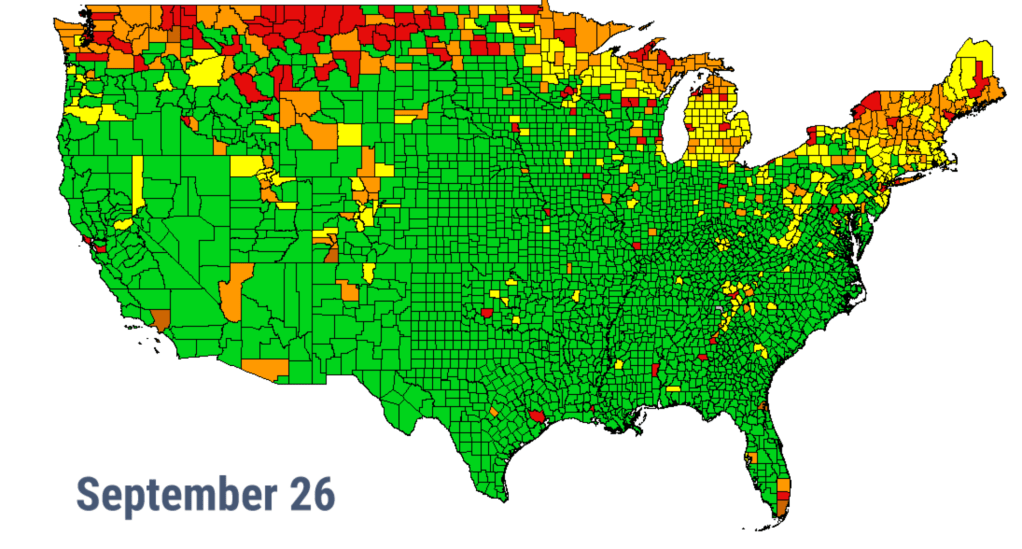
  2. Almanac – The Almanac’s Fall Foliage Map is an interactive tool that tracks and predicts peak fall colors across the United States. It provides estimated peak dates and offers tips for viewing the best autumn displays.
  3. Quebec – Bonjour Québec’s website provides a real-time, color-coded map to track the progression of fall foliage across the province. It is an excellent resource for planning a trip to see the autumn colors in Quebec.
  4. New Brunswick – The Tourism New Brunswick website offers a fall foliage guide, suggesting scenic road trips and highlighting that peak colors occur in late September and early October, with a variation between the northern and southern regions.
Visit our Instagram and watch our stories to get more live updates.

October 20, 2025

The unmistakable chill in the air isn’t just a sign to grab your favourite cozy sweater – it’s nature’s signal that the fall spectacle is reaching its most breathtaking stage! Cool temperatures are aggressively pushing the remaining greens toward a magnificent peak, and the result is a city awash in deeper, richer hues than ever before. If you’ve been waiting for the prime viewing window, now is the time to get out and experience the magnificent foliage colours exploding all around Vancouver.

Foliage Stage in Vancouver

In peak right now:
These trees are shining the brightest right now! They are providing the most intense, saturated colors of the season, marking a glorious temporary peak for their species:

SpeciesPrimary Color at Near PeakBest Places to Find
Ash TreesVibrant Yellow, OrangeResidential streets (e.g., Kitsilano, UBC), City Parks
Red MapleDeep Scarlet, Fiery RedStanley Park Causeway, Queen Elizabeth Park
Katsura TreeBrilliant Gold, Yellow-OrangeVanDusen Garden, certain city side streets
Sugar MapleOrange-Red, Yellow-GoldMajor parks and cultivated garden areas
Honey LocustClear, Bright YellowDowntown streets, False Creek areas
Sweetgum / LiquidambarMulti-coloured showstoppers! Look for rich blends of gold, deep red, purple, and sometimes black-red leaves on the same treeAlong the paths in Mountain View Cemetery (between 33rd/37th)
Big Leaf MapleMassive, bright yellow and golden-mustard leaves. Currently shedding, creating impressive carpets of colourWest 10th Avenue (Blenheim to Alma) and Arbutus Greenway
DogwoodTurning a signature vivid scarlet and deep burgundy. They offer a brilliant contrast to the evergreensTurning a signature vivid scarlet and deep burgundy. They offer a brilliant contrast to the evergreens

Here are some pictures I took at Mount Pleasant:

Near peak right now:

SpeciesPrimary Color at Near PeakBest Places to Find
Japanese MapleDeep Crimson, Ruby RedFamous in Japanese Gardens (Nitobe, VanDusen) and residential front yards
Cherry TreesOrange, Yellow-RedFound more on forest edges and lower mountain trails (e.g., Pacific Spirit Park)
Vine MapleOrange, Yellow-RedFound more on forest edges and lower mountain trails (e.g., Pacific Spirit Park)

Where to See the Peak Foliage (Beyond the Big Parks)

While Queen Elizabeth Park and VanDusen are always reliable, for those looking for a more neighbourhood-focused or specific spot to see our in-peak trees, here are some must-visit locations right now:

  • The West 10th Avenue Canopy: Forget the famous gardens for a moment and take a walk along West 10th Avenue between Blenheim and Alma Streets. Here, you’ll find a lush canopy of Big Leaf Maple and other towering species creating one of the city’s most impressive golden tunnels.
  • Mountain View Cemetery: The stretch of path between 33rd and 37th Avenue within the cemetery is lined with trees that turn a brilliant, fiery red—a beautiful and reflective spot to see the Dogwood and Liquidambar at their best.
  • UBC’s Main Mall and TRIUMF Loop: The wide, university boulevards have a majestic East Coast feel as the season peaks. For vivid reds and yellows, head to the areas around the Main Mall and the TRIUMF building, which are spectacularly lined with turning foliage.
  • The Arbutus Greenway (South of 41st): Perfect for a bike or walk! This popular off-street path is currently boasting some spectacular leaf displays, particularly on the section south of 41st Avenue where the tree concentration is highest.
  • The Sylvia Hotel: For a stunning photo-op of a classic Vancouver landmark, head to the Sylvia Hotel on Beach Avenue. The ivy climbing the side of the historic building transforms into a deep, vibrant scarlet that can’t be missed.
  • East Van’s Hidden Gem: Don’t overlook the side streets of East Vancouver. Take a cruise or a stroll along Cambridge Street between Nanaimo and Slocan for a fantastic, neighbourhood-scale view of golden and red leaves.

What’s Next?
With the colour show hitting its magnificent stride, there’s no better time to grab a coffee, layer up, and get out to enjoy Vancouver’s spectacular fall. This peak window doesn’t last long, so use this guide, find your favourite spot, and let us know what magnificent colours you find on your own leaf-peeping adventures! Happy season watching!

Vancouver’s Maple Trees

Maples are the heart of Vancouver’s fall foliage, painting the city in vibrant yellows, oranges, and reds. But with so many types, it can be tough to tell them apart. Knowing which is which can make your next walk even more rewarding.

Here’s a simple guide to identifying some of Vancouver’s most common maples.

Bigleaf Maple (Acer macrophyllum)

  • Key Feature: The largest leaves of any maple in the world. They are typically the size of a dinner plate.
  • Appearance: Leaves have 5 lobes with deep, rounded sinuses between them. The tree is native to the Pacific Northwest and grows to a massive size.
  • Fall Color: A striking, uniform golden yellow.

Vine Maple (Acer circinatum)

  • Key Feature: Small, delicate leaves and a multi-stemmed, shrub-like growth habit.
  • Appearance: The leaves have 7 to 9 lobes and resemble a small fan. The tree often grows in dense clumps or twists around other trees, giving it a “vine-like” appearance.
  • Fall Color: Fiery reds and oranges.

Japanese Maple (Acer palmatum)

  • Key Feature: The leaves are deeply cut with 5 to 9 finely toothed lobes, creating a star-like shape.
  • Appearance: These are popular ornamental trees, often small and shrubby with a delicate, graceful form.
  • Fall Color: Known for their dramatic, brilliant crimson, burgundy, or deep red.

Norway Maple (Acer platanoides)

  • Key Feature: A milky, white sap drips from the stem when a leaf is pulled from a twig. The leaves are also wider than they are long.
  • Appearance: A common street tree. The leaves have 5 to 7 pointed lobes.
  • Fall Color: Most varieties turn a clear, bright yellow.

Red Maple (Acer rubrum)

  • Key Feature: The leaves are typically 3-lobed (sometimes 5-lobed) with serrated edges and a reddish stem.
  • Appearance: A medium-sized tree with a rounded crown.
  • Fall Color: Known for their brilliant scarlet and orange-red foliage.

The next time you’re out, take a closer look and see if you can spot the difference!

Foliage in Canada

Deciding where and especially where to go and watch the foliage in peak color can be a struggle.
However, there are many sources that can help you make a better decision.

  1. Ontario Parks – This is the official Ontario Parks fall color tracker. It provides real-time reports on leaf color changes and peak viewing times across all provincial parks in Ontario. The site includes dominant colors, leaf fall percentages, and recommended viewing spots for each park. It’s a go-to resource for “leaf peepers” in the region..
  2. Almanac – The Almanac’s Fall Foliage Map is an interactive tool that tracks and predicts peak fall colors across the United States. It provides estimated peak dates and offers tips for viewing the best autumn displays.
  3. Quebec – Bonjour Québec’s website provides a real-time, color-coded map to track the progression of fall foliage across the province. It is an excellent resource for planning a trip to see the autumn colors in Quebec.
  4. New Brunswick – The Tourism New Brunswick website offers a fall foliage guide, suggesting scenic road trips and highlighting that peak colors occur in late September and early October, with a variation between the northern and southern regions.

Visit our Instagram and watch our stories to get more live updates.

October 15, 2025

What a difference two weeks makes! In late September, we were reporting scattered greens and tentative yellows. Now, on October 15th, a recent blast of cool nights has triggered a stunning transformation. The city has sprinted past the “Mid-Peak” threshold and is now firmly in the Near Peak viewing window—the absolute best time to catch the color explosion before the season ends.

This is the weekend to explore! Here is the latest species status to guide your leaf-peeping missions across the Lower Mainland:

Foliage Stage in Vancouver

In peak right now:
These trees are shining the brightest right now! They are providing the most intense, saturated colors of the season, marking a glorious temporary peak for their species:

SpeciesPrimary Color at Near PeakBest Places to Find
Ash TreesVibrant Yellow, OrangeResidential streets (e.g., Kitsilano, UBC), City Parks
Red MapleDeep Scarlet, Fiery RedStanley Park Causeway, Queen Elizabeth Park
Katsura TreeBrilliant Gold, Yellow-OrangeVanDusen Garden, certain city side streets
Sugar MapleOrange-Red, Yellow-GoldMajor parks and cultivated garden areas
Honey LocustClear, Bright YellowDowntown streets, False Creek areas

Here are some pictures I took at Fort Langley:

MID PEAK (Building Color, Rapidly Approaching Peak)

SpeciesPrimary Color at Near PeakBest Places to Find
Japanese MapleDeep Crimson, Ruby RedFamous in Japanese Gardens (Nitobe, VanDusen) and residential front yards
Cherry TreesOrange, Yellow-RedFound more on forest edges and lower mountain trails (e.g., Pacific Spirit Park)
Vine MapleOrange, Yellow-RedFound more on forest edges and lower mountain trails (e.g., Pacific Spirit Park)
DogwoodDeep Red, PlumParks and naturalized areas—provides a gorgeous dark contrast
Bigleaf MapleBright Gold, YellowDominant in park trails and ravines. they will peak quickly!

What’s Next?
The next week offers the absolute highest concentration of color across the Lower Mainland. We are operating in a golden window—get out and enjoy the Ash and Red Maples at their prime, and watch the Japanese and Bigleaf Maples build toward their peak! Remember to take photos now; the colors are spectacular, but a cold storm could end the show early.

Vancouver’s Maple Trees

Maples are the heart of Vancouver’s fall foliage, painting the city in vibrant yellows, oranges, and reds. But with so many types, it can be tough to tell them apart. Knowing which is which can make your next walk even more rewarding.

Here’s a simple guide to identifying some of Vancouver’s most common maples.

Bigleaf Maple (Acer macrophyllum)

  • Key Feature: The largest leaves of any maple in the world. They are typically the size of a dinner plate.
  • Appearance: Leaves have 5 lobes with deep, rounded sinuses between them. The tree is native to the Pacific Northwest and grows to a massive size.
  • Fall Color: A striking, uniform golden yellow.

Vine Maple (Acer circinatum)

  • Key Feature: Small, delicate leaves and a multi-stemmed, shrub-like growth habit.
  • Appearance: The leaves have 7 to 9 lobes and resemble a small fan. The tree often grows in dense clumps or twists around other trees, giving it a “vine-like” appearance.
  • Fall Color: Fiery reds and oranges.

Japanese Maple (Acer palmatum)

  • Key Feature: The leaves are deeply cut with 5 to 9 finely toothed lobes, creating a star-like shape.
  • Appearance: These are popular ornamental trees, often small and shrubby with a delicate, graceful form.
  • Fall Color: Known for their dramatic, brilliant crimson, burgundy, or deep red.

Norway Maple (Acer platanoides)

  • Key Feature: A milky, white sap drips from the stem when a leaf is pulled from a twig. The leaves are also wider than they are long.
  • Appearance: A common street tree. The leaves have 5 to 7 pointed lobes.
  • Fall Color: Most varieties turn a clear, bright yellow.

Red Maple (Acer rubrum)

  • Key Feature: The leaves are typically 3-lobed (sometimes 5-lobed) with serrated edges and a reddish stem.
  • Appearance: A medium-sized tree with a rounded crown.
  • Fall Color: Known for their brilliant scarlet and orange-red foliage.

The next time you’re out, take a closer look and see if you can spot the difference!

Foliage in Canada

Deciding where and especially where to go and watch the foliage in peak color can be a struggle.
However, there are many sources that can help you make a better decision.

  1. Ontario Parks – This is the official Ontario Parks fall color tracker. It provides real-time reports on leaf color changes and peak viewing times across all provincial parks in Ontario. The site includes dominant colors, leaf fall percentages, and recommended viewing spots for each park. It’s a go-to resource for “leaf peepers” in the region..
  2. Almanac – The Almanac’s Fall Foliage Map is an interactive tool that tracks and predicts peak fall colors across the United States. It provides estimated peak dates and offers tips for viewing the best autumn displays.
  3. Quebec – Bonjour Québec’s website provides a real-time, color-coded map to track the progression of fall foliage across the province. It is an excellent resource for planning a trip to see the autumn colors in Quebec.
  4. New Brunswick – The Tourism New Brunswick website offers a fall foliage guide, suggesting scenic road trips and highlighting that peak colors occur in late September and early October, with a variation between the northern and southern regions.

Visit our Instagram and watch our stories to get more live updates.

October 3, 2025

October has arrived, and with the cold, crisp air finally settling across the region, lower temperatures are already pushing color change. We are now seeing the first significant progress in many areas across the city.

The hot and dry weather that marked the end of September had stalled foliage progression, leaving many trees stubbornly green. This delay occurred because the unseasonably warm nights prevented the crucial chemical process needed for vibrant color. The leaves require cool, crisp nights to slow the breakdown of chlorophyll and trap sugars in the leaves; these trapped sugars are what fuel the creation of brilliant red and orange pigments. The recent heat kept this essential mechanism from initiating.

Fortunately, the current shift to a sustained cooler and wetter pattern provides the perfect catalyst. With lower temperatures and much-needed moisture replenishing the trees, they will rapidly shed their green and reveal the brilliant colors hidden within. We anticipate a major leap in vibrancy and color saturation across the city and surrounding areas over the coming days, marking the true start of Vancouver’s magnificent autumn show.

Read more for what to expect.

Foliage Stage in Vancouver

October has arrived, and with the recent shift to cooler, damper weather, Vancouver’s foliage is making significant strides this week. The initial delay caused by September’s heat is over, and the colors are now rapidly deepening across the region, bringing a vibrant layer to our urban landscape

Here’s a snapshot of the current foliage stage in Vancouver’s key trees as of early October:


  • Japanese Maples: Approaching mid-peak, these iconic trees are 40-50% changed, showing brilliant crimson and deep orange.
  • Vine Maples: A regional favorite, these are at a beautiful 50% changed, with fiery reds and oranges dominating.
  • Dogwoods: The leaves are actively changing, moving from green to rich burgundy and red tones.
  • Garry Oaks: These are still green, indicating they will be one of the last species to contribute their golden color to the season.
  • Bigleaf Maple: Our native giants are at 20-30% changed, starting their transition to a classic golden yellow.
  • Cherry Trees: Leaves are actively changing, offering a mix of yellow and reddish-brown hues.
  • Honey Locust: They are in peak color, displaying a striking, uniform bright yellow.

Here are some pictures I took at Fort Langley:

Vancouver’s Maple Trees

Maples are the heart of Vancouver’s fall foliage, painting the city in vibrant yellows, oranges, and reds. But with so many types, it can be tough to tell them apart. Knowing which is which can make your next walk even more rewarding.

Here’s a simple guide to identifying some of Vancouver’s most common maples.

Bigleaf Maple (Acer macrophyllum)

  • Key Feature: The largest leaves of any maple in the world. They are typically the size of a dinner plate.
  • Appearance: Leaves have 5 lobes with deep, rounded sinuses between them. The tree is native to the Pacific Northwest and grows to a massive size.
  • Fall Color: A striking, uniform golden yellow.

Vine Maple (Acer circinatum)

  • Key Feature: Small, delicate leaves and a multi-stemmed, shrub-like growth habit.
  • Appearance: The leaves have 7 to 9 lobes and resemble a small fan. The tree often grows in dense clumps or twists around other trees, giving it a “vine-like” appearance.
  • Fall Color: Fiery reds and oranges.

Japanese Maple (Acer palmatum)

  • Key Feature: The leaves are deeply cut with 5 to 9 finely toothed lobes, creating a star-like shape.
  • Appearance: These are popular ornamental trees, often small and shrubby with a delicate, graceful form.
  • Fall Color: Known for their dramatic, brilliant crimson, burgundy, or deep red.

Norway Maple (Acer platanoides)

  • Key Feature: A milky, white sap drips from the stem when a leaf is pulled from a twig. The leaves are also wider than they are long.
  • Appearance: A common street tree. The leaves have 5 to 7 pointed lobes.
  • Fall Color: Most varieties turn a clear, bright yellow.

Red Maple (Acer rubrum)

  • Key Feature: The leaves are typically 3-lobed (sometimes 5-lobed) with serrated edges and a reddish stem.
  • Appearance: A medium-sized tree with a rounded crown.
  • Fall Color: Known for their brilliant scarlet and orange-red foliage.

The next time you’re out, take a closer look and see if you can spot the difference!

Foliage in Canada

Deciding where and especially where to go and watch the foliage in peak color can be a struggle.
However, there are many sources that can help you make a better decision.

  1. Ontario Parks – This is the official Ontario Parks fall color tracker. It provides real-time reports on leaf color changes and peak viewing times across all provincial parks in Ontario. The site includes dominant colors, leaf fall percentages, and recommended viewing spots for each park. It’s a go-to resource for “leaf peepers” in the region..
  2. Almanac – The Almanac’s Fall Foliage Map is an interactive tool that tracks and predicts peak fall colors across the United States. It provides estimated peak dates and offers tips for viewing the best autumn displays.
  3. Quebec – Bonjour Québec’s website provides a real-time, color-coded map to track the progression of fall foliage across the province. It is an excellent resource for planning a trip to see the autumn colors in Quebec.
  4. New Brunswick – The Tourism New Brunswick website offers a fall foliage guide, suggesting scenic road trips and highlighting that peak colors occur in late September and early October, with a variation between the northern and southern regions.

Visit our Instagram and watch our stories to get more live updates.